Lepidoptera [Leh-Pih-DOP-Turr-Uh] – The order of butterflies and moths.
All images are taken from my landscape or from my clients’ landscapes with permission.
When it comes to starting a butterfly garden, there are three main things that you need: host plants, nectar plants, and shelter plants. The best butterfly gardens that provide habitat for and attract the most butterflies will incorporate all three, as well as some additional components which will be discussed later in this post.
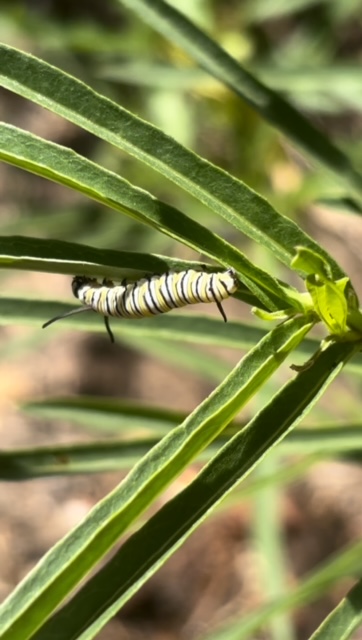 Monarch Caterpillar on Narrow Leaf Milkweed (Asclepias fascicularis) in Lakewood, CA.
Host plants are plants that serve as a food source for caterpillars. Adult butterflies lay their eggs on the leaves of their respective host plants, and different types of butterflies require different species of host plants. For example, Monarch Butterflies lay their eggs almost exclusively on plants in the Genus Asclepias, commonly known as milkweeds. Upon hatching, the caterpillars will continue to consume the leaves of the plant until they are large enough to pupate.
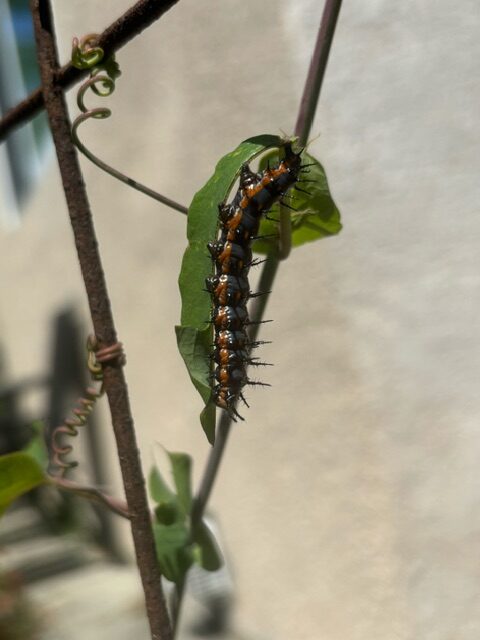 Gulf Fritillary Butterfly on Passiflora caerulea in Lakewood, CA.
Nectar Plants serve as a crucial source of nectar to adult butterflies which use their proboscises to reach into flowers and consume nectar, often resulting in pollination of the plant from which nectar was consumed. This pollination is essential for the reproduction of most plants, as successful pollination results in the formation of seed(s). Certain plants are better sources of nectar than others, and a hand-written list of plants that I recommend specifically for attracting butterflies will be included in this post.
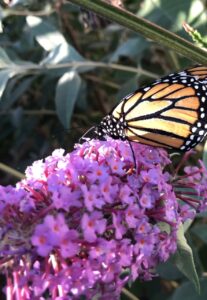
Monarch nectaring on Buddleja
Shelter Plants serve as a sanctuary for butterflies to shelter at night, during storms or high winds, or during the process of pupation in which caterpillars anchor themselves to a structure and metamorphose into a chrysalis. Shelter Plants are often shrubs or trees, and some shelter plants can also serve as nectar plants and/or host plants.
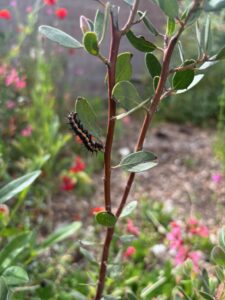
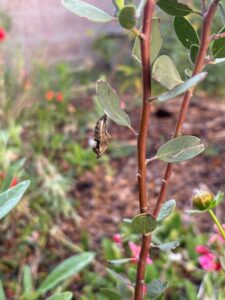
Gulf Fritillary Butterfly chrysalis on small Manzanita shrub. The second picture was taken three days after the first picture.
In addition to host plants, nectar plants, and shelter plants, it is also beneficial (and will increase the total amount of butterflies visiting your garden or landscape) to include a source of water for butterflies to “puddle.” Puddling is a behavior where butterflies ingest minerals, such as naturally-occurring sodium, through water, mud, or moist and decaying plant matter. This behavior is critical for the overall well-being of the butterfly, and it is more commonly observed in male butterflies. Providing habitat for this crucial behavior to take place can be as simple as a local minima in elevation where water tends to temporarily pool after irrigation. It does not need to be a permanent body of water, such as a pond. Bird Baths and fountains can also serve as an effective, temporal source of water for butterflies, and they will often attract birds to your garden as well.
Finally, the last requirement for a successful butterfly garden is to eschew the use of pesticides, especially in areas in which butterflies or caterpillars are active or present. Synthetic pesticides are especially insidious, as they tend to have a much longer half-life than organic pesticides, allowing them to persist for longer and potentially cause cascading damage to different levels of the ecosystem. Organic pesticides like horticultural oil and neem oil are broken down by the environment much more quickly and are preferable to synthetic pesticides, but even organic pesticides can still harm beneficial insects like butterflies if they are directly exposed. Thus it is important to use organic pesticides judiciously and only when necessary so as to minimize any negative impact on beneficial insects.
Monarch Butterfly (Danaus plexippus) – Asclepias species (Milkweeds)
Narrow-Leaf Milkweed – Asclepias fascicularis – This is the most readily available native milkweed species in our area. It has white flowers when in bloom. It is generally better to use native milkweed species. Non-native species of milkweed like Asclepias curassivica (Tropical Milkweed/Mexican Milkweed) still serve as a viable host plant for monarchs; however, because they tend to grow as perennial plants whereas most of our natives grow as annuals, they are more likely to harbor the OE parasite which is harmful to monarch populations. Tropical milkweed can be cut back throughout the year in order to refresh the plant and simulate what occurs in winter with our native milkweeds, but it is generally better and easier to just choose native species of milkweed for new plantings.
Wooly-Pod Milkweed – Asclepias eriocarpa – This species is also native to our area, though is far less common in nurseries than the Narrow-leaf Milkweed. Seeds are readily available online. It has fuzzy, gray-green leaves and pink flowers.
Showy Milkweed – Asclepias speciosa – This species is also a California native, though it tends to occur in central and northern California. It has pink flowers and is more suitable for areas with consistent moisture, unlike the species listed above.
Tuberous Milkweed aka Butterfly Weed (Asclepias tuberosa) – This is a native milkweed which is more common in the central and eastern parts of the US, though it can occur in California. It has solid orange flowers.
Asclepias californica – this species is native to California and tends to occur in very dry, rocky soils. I have never seen it available in any nursery, and even the seeds are difficult to obtain. It is much more difficult to cultivate than the species listed above, which are generally very easy to grow.
Painted Lady Butterfly (Vanessa cardui), West Coast Lady Butterfly (Vanessa anabella), American Lady (Vanessa virginiensis) – Several host plants, though the ones I recommend the most for our area are:
-Desert Globe Mallow (Sphaeralcea ambigua) – This is one of the best plants for a butterfly garden. It is a host plant/shelter plant and a great source of nectar. Plus, it is extremely drought tolerant and can bloom for most months out of the year in our climate when positioned in full sun. It flowers for much longer here than where it is typically found in California’s south-eastern deserts due to our comparatively greater amount of rainfall and more moderate temperatures. It will thrive without supplemental water after establishment and may only need to be cut back occasionally to refresh its foliage and prevent it from getting too woody.
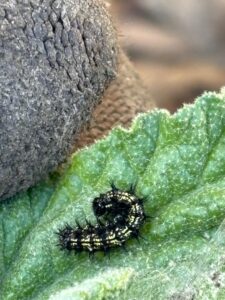
Butterfly caterpillar in the genus Vanessa on Desert Globe Mallow. Top right of image is my fingertip in glove for size reference.
-California Mugwort (Artemisia douglassiana) – A most fascinating plant with foliage that is green on top and silvery on the bottom. It has a delightful scent, and smelling it can increase the vividness of one’s dreams and the likelihood that lucid dreams will occur. It is especially effective when the leaves are placed into a sachet and placed under one’s pillow. It is even more effective at producing these effects when chewed or made into a tea; however, it does contain small amounts of Thujone which is a neurotoxin that is also present in other commonly consumed herbs such as Common Sage (Salvia officinalis). As with anything, the dosage determines its safety; however, this is not medical advice. In fact, I’d encourage you not to consume the plant for liability reasons, although I have consumed small amounts of the plant in the past, and the effect it has on dreams is very interesting! Aside from its well-documented dream-potentiating effects, it is yet another host plant for Lady Butterflies and a pleasant-scented, low maintenance addition to any butterfly garden.
-Chapparal Bush Mallow (Malacothamnus fasciculatus) – Large, fast-growing shrub with tons of cup-shaped pink flowers in Summer and silvery-green, mallow-like leaves.
-Silver Wormwood (Artemisia ludoviciana) – An alternative option in the same genus as California Mugwort which is not known for having the same dream-potentiating effects.
-California sagebrush (Artemisia californica) – Another option in the same genus as the two aforementioned plants which is not known for having the same dream-potentiating effects as California Mugwort. This species is also a wonderful shelter plant and is considered to be a keystone species of the coastal sage scrub ecosystem. It has sometimes been referred to as “cowboy cologne” due to its pleasant scent and its past usage by early settlers in California.
-California Cudweed (Pseudognaphalium californicum) – It is not particularly showy, living up to its common name of “cudweed.” Nevertheless, this is one of the plants that I do see out hiking in the Angeles National Forest and in various locations in Orange County. It could be a good addition for people who are seeking to very closely emulate the habitats of their local ecosystems. This would be a plant which would likely be grown from seed, as it is not commonly available in nurseries.
Wright’s Cudweed (Pseudognaphalium microcephalum) – A different species in the same genus. The foliage is silvery-white and fuzzy which I think adds more aesthetic value; however, it is still not the most showy of plants. It’s another locally native option which would likely have to be sourced from ethically-obtained seed rather than from established potted plants.
Variable Checkerspot Butterfly (Euphydryas chalcedona):
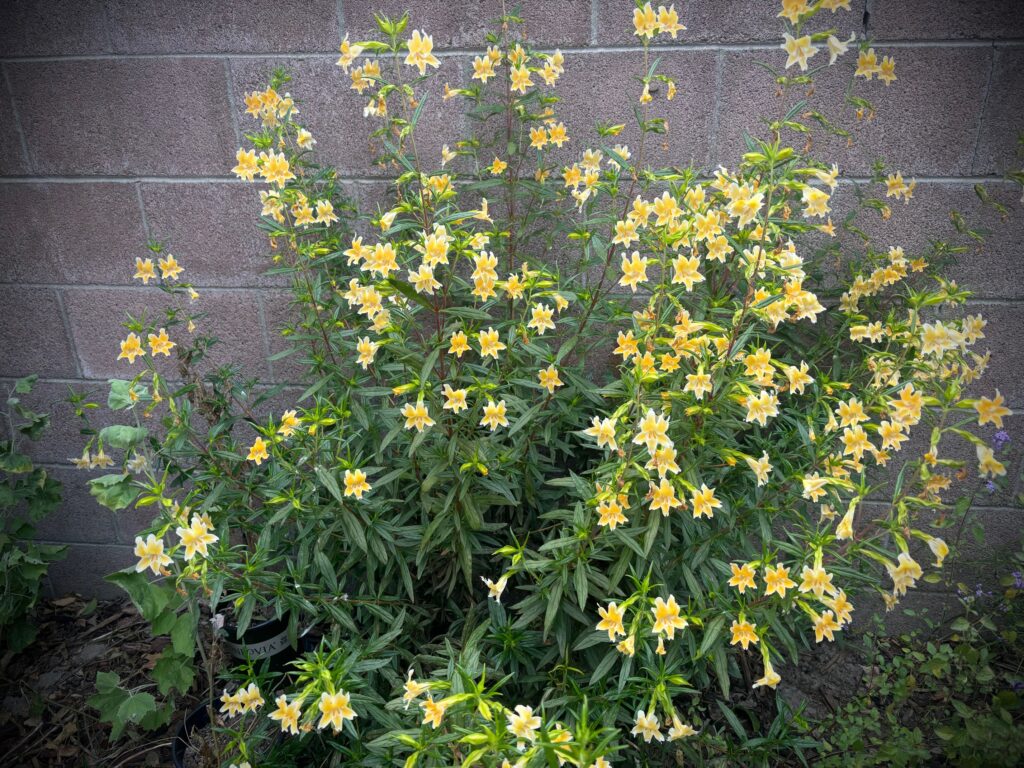
Monkeyflower (Diplacus aurantiacus syn. Mimulus aurantiacus)
Indian Paintbrush (Castilleja species)
Island Snapdragon (Gambelia speciosa)
California Bee Plant (Scrophularia californica)
Butterfly Bush (Buddleja species) (Non-Native, Select sterile hybrids to prevent unwanted spread via seed)
Common Buckeye Butterfly (Junonia coenia):
Monkeyflower (Diplacus aurantiacus syn. Mimulus aurantiacus)
Indian Paintbrush (Castilleja species)
Azure Penstemon (Penstemon azureus)
Western Vervain (Verbena lasiostachys)
FrogFruit (Phyla nodiflora) – Hardy, no-mow groundcover option
Gulf Fritillary (Dione vanilla) – Texas/Florida Native Butterfly that is also present in California:
Purple Passionflower (Passiflora incarnata) – Vigorous Vine. US native but not a California native.
Blue Passionflower (Passiflora caerulea) – Vigorous Vine. US native but not a California native.
El Segundo Blue Butterfly (Euphilotes allyni) – This federally-listed endangered (critically-imperiled) butterfly is endemic to Southern California. Its host plant is Seacliff Buckwheat (Eriogonum parvifolium).
Western Tiger Swallowtail (Papilio rutulus):
Hollyleaf Cherry – Prunus ilicifolia
-Alder Species
-Western Sycamore (Platanus racemosa)
-Coast Live Oak (Quercus agrifolia)
Pipevine Swallowtail (Battus philenor):
Dutchman’s Pipe Vine (Aristolochia californica)
Many species of tiny Blue Butterflies in the genus Icaria:
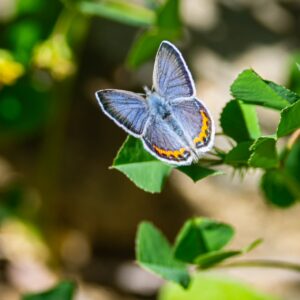
-Buckwheat species (Eriogonum species)
-California Poppy (Eschscholzia californica)
-Lupine species (Lupinus spp.)
Pale Swallowtail (Papilio eurymedon):
-Ceanothus species (which also happen to host the beautiful Ceanothus Moth)
-California Coffeeberry (Frangula californica)
-Salvia clevelandii, Salvia leucophylla, and hybrids of these two species. These fragrant native shrubs bloom in spring and summer and are one of the best plants for attracting adult butterflies to your garden or landscape. They are also incredibly stunning when in full bloom.
-Verbena lilacina ‘De La Mina’
-Achillea millefolium
-Eriogonum fasciculatum
-Eriogonum grande var. rubescens
-Eriogonum umbellatum
-Eriogonum parvifolium
-Spaeralcea ambigua
-Diplacus aurantiacus and its many hybrid varieties
-Monardella villosa
-Salvia greggii, Salvia microphylla, and the resulting hybrids of these two species (US natives, not CA natives)
-Burroughsia fastigiata (Baja Tree Verbena) – rare, small tree which is a wonderful nectar source
-Encelia californica
-Encelia farinosa
-Echinacea species (US native, not CA native)
-Corethrogyne filaginifolia ‘Silver Carpet’ (Silver-Carpet Beach Aster)
-Coyote Brush (Baccharis pilularis)
-Erigeron glaucus
-Epilobium canum
-Lupine species (annuals)
Many of the plants listed as host plants and/or nectar plants can also serve as shelter plants, but here are some recommendations for plants that are particularly useful as shelter plants. My recommendations are plants that I have seen caterpillars choose to pupate on or butterflies use for shelter in our area:
Arctostaphylos species (Manzanita) – I have seen many different species of butterfly caterpillar choose Manzanita species as a structure on which to pupate.
Polystichum munitum (Western Sword Fern) – A great choice for shady or moist areas.
Artemisia californica (California Sagebrush) – A wonderful, fragrant shelter plant with silvery foliage
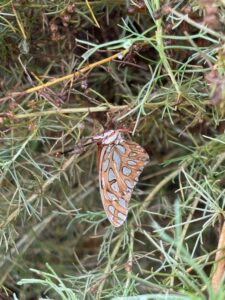 Gulf Fritillary sheltering in California Sagebrush
Diplacus aurantiacus (Monkeyflower) – I have seen numerous adult butterflies sheltering in this plant on rainy or windy days
Salvia apiana (White Sage)
Salvia mellifera (Black Sage)
Lemonade Berry (Rhus integrifolia)
Sugar Bush (Rhus ovata)
Ceanothus species
Encelia californica
Abutilon Palmeri
California CoffeeBerry
Toyon (Heteromeles arbutifolia)
Many oak species, such as Coast Live Oak or Valley Oak. For a much smaller oak, choose Scrub Oak (Quercus berberidfolia) or Nuttal’s scrub oak (Quercus dumosa)
Eucalyptus trees (Non-native and highly flammable)
I hope that this post provides you with all the information you need to create your own thriving butterfly garden/landscape or gives you ideas for what plants you would like to have incorporated into your landscape design with Garden Sage Landscapes.
I write these blog posts myself without the use of AI, and all the pictures featured are from my garden or my clients’ gardens/landscapes unless stated otherwise. This post will continue to be updated and reformatted, and more pictures and information will be added over time. Thanks for viewing!
I love to hike, and I constantly find myself identifying and photographing plants while I’m out there on the trail. I thought it would be nice to create this blog to showcase some of the native plants and pollinators I encounter in their natural habitat. I hope that this blog serves as a useful source of information regarding the native plants of Southern California and the creatures that depend on them, as well as a source of inspiration for incorporating them into a garden setting/landscape. Often times, the best native plant designs seek to emulate the growing conditions of plants in their native habitat. By understanding the growing conditions of native plants and how they interact with their respective plant communities and the ecosystem at large, we can maximize our benefit to local pollinators and birds while creating a serene and naturalistic space that thrives with far less maintenance than a grass lawn would require.
2/3/2026 Wisdom Tree Hike – Burbank, CA
Botanical Name: Encelia californica
Common Name: California Sunflower Bush
Family: Asteraceae [Aster-AY-See or Aster-AY-See-e] (Daisy/Sunflower Family)
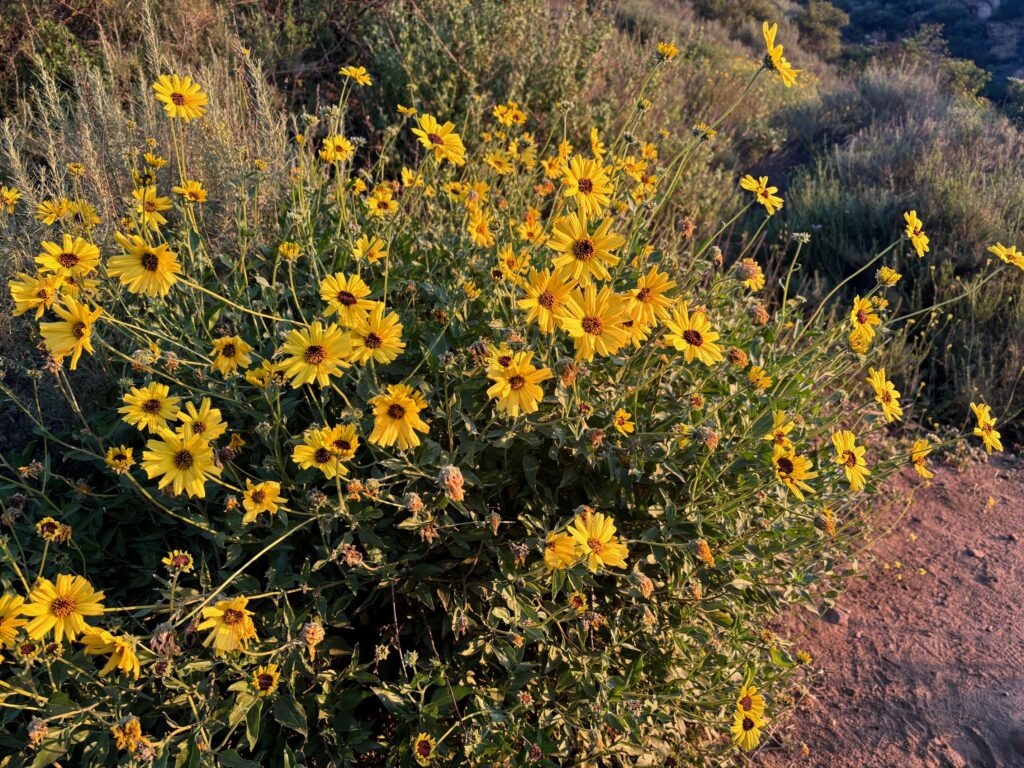
This cheerful, bright yellow daisy is an excellent source of pollen and nectar for bees, butterflies, and other pollinators. Mature plants bloom in winter and spring, and birds enjoy eating the seed heads after the pollinated flowers have dried up. It is also used by butterflies as a shelter plant. On this particular hike, I saw an American Lady Butterfly consuming nectar from the Encelia, but it flew away before I was able to get a good picture. Song Sparrows and Beewick’s Wrens darted through the masses of flowers, occasionally landing atop the foliage or on a nearby shrub to chirp and bask in the sun. I also saw the very common Western honey bee (Apis mellifera) and an insect I’d never seen before – the Mexican Cactus Fly (Copestylum mexicanum) – consuming nectar from the plants. The cactus flies are actually beneficial pollinating insects that are native to both Southern California and Mexico, but those who might be put off by the prospect of attracting a giant (yet harmless) fly should fear not: they depend on the presence of rotting cacti in order for their larvae to feed and are therefore very unlikely to be found in your garden.
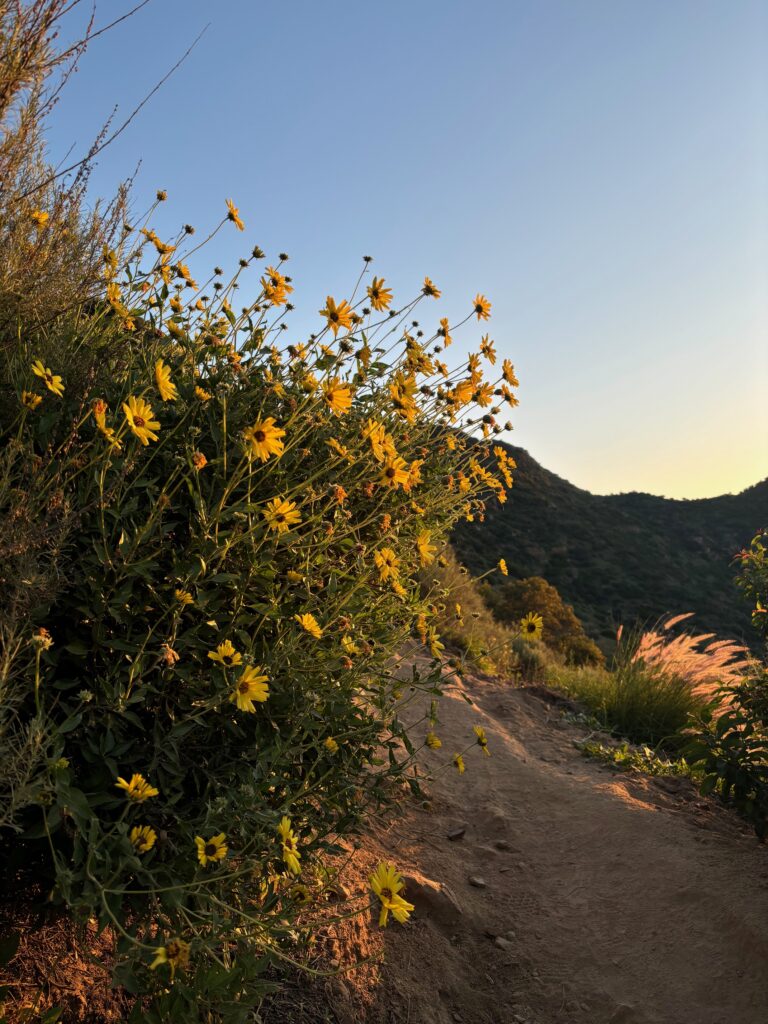
Encelia californica typically grows in full sun conditions (6 hours or more of direct sun per day, on average). While it prefers full sun, it can tolerate partial shade, though it may flower less profusely in such conditions. It is a drought-tolerant shrub. The term “shrub,” for many, invokes imagery of a green foliage plant devoid of showy flowers; however, shrubs are just perennial plants that get woody at the base over time. Herbaceous perennials, on the other hand, do not get woody at the base, and as a result they may completely die back above ground, seemingly vanishing, only to regrow from their root system when the conditions are right. Despite its status as a shrub, it is not always evergreen. Rather, it is classified as a semi-deciduous plant. In periods of drought such as our typical summer conditions, the foliage above its woody base may dry up and fall off, leaving the brown woody structure of the plant remaining. New foliage will grow when there is once again sufficient moisture. In a garden setting, the plant can often be kept evergreen by providing occasional supplemental irrigation in the summer, but care must be taken not to water established plants too frequently during the summer. Watering established plants too frequently in the summer can potentially kill them. Usually, a deep watering once or twice a month in summer is enough to keep established plants from dropping their foliage. If an Encelia californica that is growing in a garden setting does go summer deciduous or partially deciduous, it can be hard pruned back to its woody base or pruned to remove only the dead branches, ensuring that the structure of the plant remains compact and tidy. If this pruning is not done to a plant that has gone summer-deciduous, next years foliage growth will tend to appear towards the tips of the old, brown wood. For this reason, most people prefer to prune plants back if they do drop their leaves in summer. Regardless of its potential to go summer deciduous, it is a very beautiful and worthwhile plant to grow that the pollinators will love.