I love to hike, and I constantly find myself identifying and photographing plants while I’m out there on the trail. I thought it would be nice to create this blog to showcase some of the native plants and pollinators I encounter in their natural habitat. I hope that this blog serves as a useful source of information regarding the native plants of Southern California and the creatures that depend on them, as well as a source of inspiration for incorporating them into a garden setting/landscape. Often times, the best native plant designs seek to emulate the growing conditions of plants in their native habitat. By understanding the growing conditions of native plants and how they interact with their respective plant communities and the ecosystem at large, we can maximize our benefit to local pollinators and birds while creating a serene and naturalistic space that thrives with far less maintenance than a grass lawn would require.
2/3/2026 Wisdom Tree Hike – Burbank, CA
Botanical Name: Encelia californica
Common Name: California Sunflower Bush
Family: Asteraceae [Aster-AY-See or Aster-AY-See-e] (Daisy/Sunflower Family)
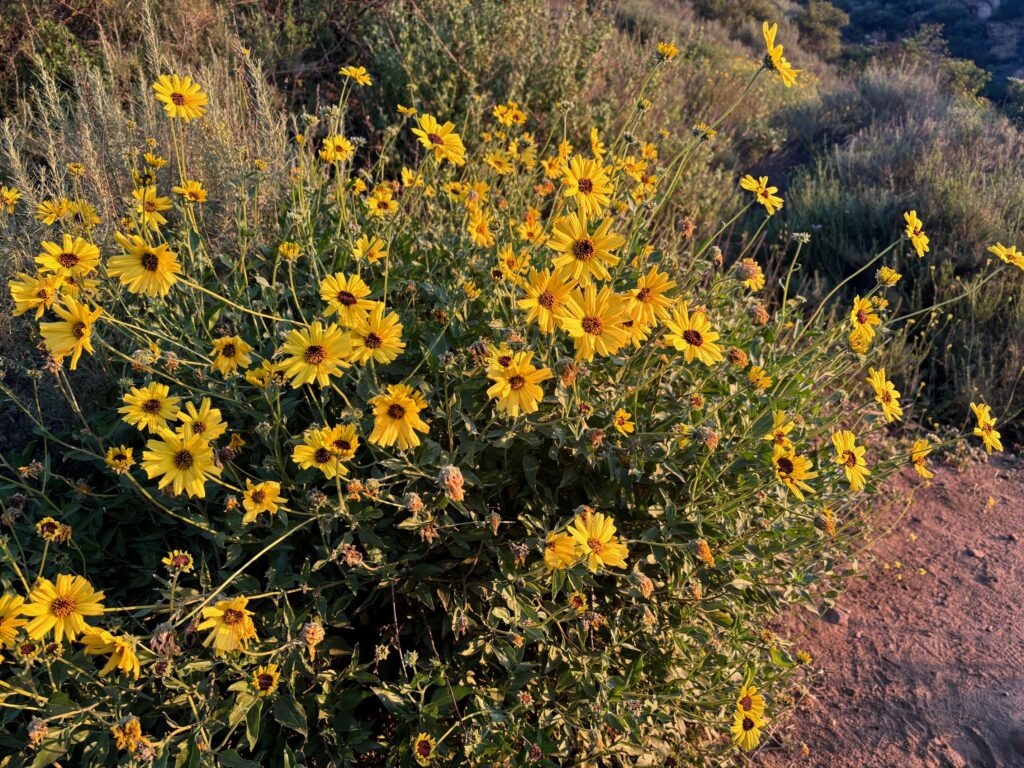
This cheerful, bright yellow daisy is an excellent source of pollen and nectar for bees, butterflies, and other pollinators. Mature plants bloom in winter and spring, and birds enjoy eating the seed heads after the pollinated flowers have dried up. It is also used by butterflies as a shelter plant. On this particular hike, I saw an American Lady Butterfly consuming nectar from the Encelia, but it flew away before I was able to get a good picture. Song Sparrows and Beewick’s Wrens darted through the masses of flowers, occasionally landing atop the foliage or on a nearby shrub to chirp and bask in the sun. I also saw the very common Western honey bee (Apis mellifera) and an insect I’d never seen before – the Mexican Cactus Fly (Copestylum mexicanum) – consuming nectar from the plants. The cactus flies are actually beneficial pollinating insects that are native to both Southern California and Mexico, but those who might be put off by the prospect of attracting a giant (yet harmless) fly should fear not: they depend on the presence of rotting cacti in order for their larvae to feed and are therefore very unlikely to be found in your garden.
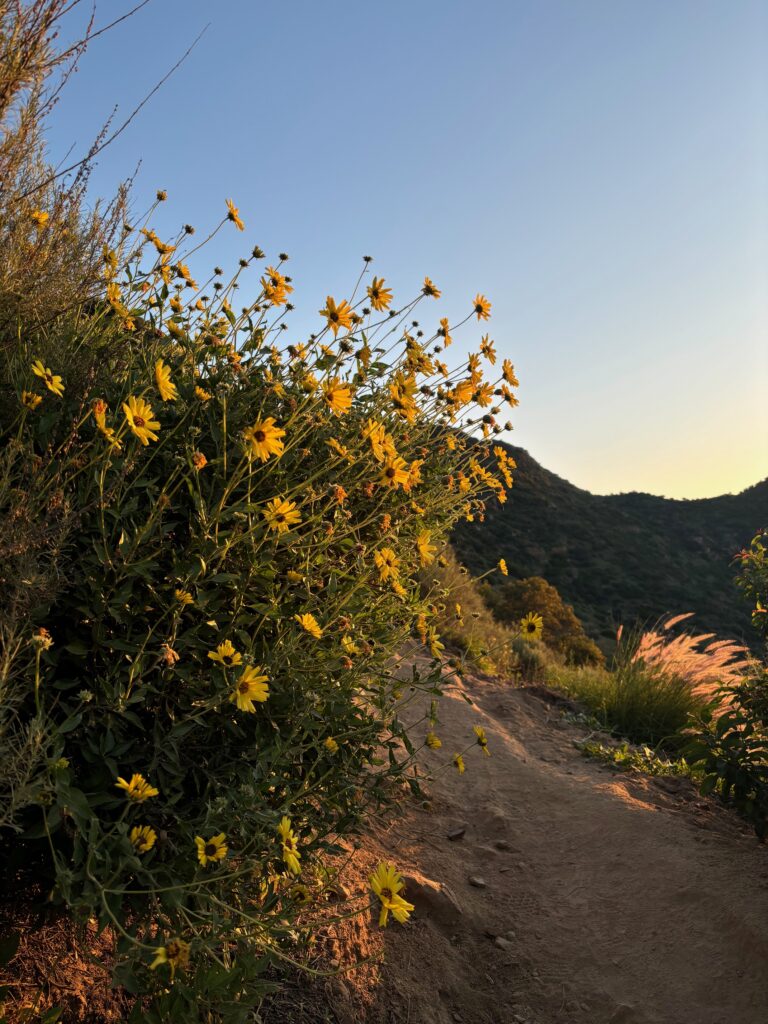
Encelia californica typically grows in full sun conditions (6 hours or more of direct sun per day, on average). While it prefers full sun, it can tolerate partial shade, though it may flower less profusely in such conditions. It is a drought-tolerant shrub. The term “shrub,” for many, invokes imagery of a green foliage plant devoid of showy flowers; however, shrubs are just perennial plants that get woody at the base over time. Herbaceous perennials, on the other hand, do not get woody at the base, and as a result they may completely die back above ground, seemingly vanishing, only to regrow from their root system when the conditions are right. Despite its status as a shrub, it is not always evergreen. Rather, it is classified as a semi-deciduous plant. In periods of drought such as our typical summer conditions, the foliage above its woody base may dry up and fall off, leaving the brown woody structure of the plant remaining. New foliage will grow when there is once again sufficient moisture. In a garden setting, the plant can often be kept evergreen by providing occasional supplemental irrigation in the summer, but care must be taken not to water established plants too frequently during the summer. Watering established plants too frequently in the summer can potentially kill them. Usually, a deep watering once or twice a month in summer is enough to keep established plants from dropping their foliage. If an Encelia californica that is growing in a garden setting does go summer deciduous or partially deciduous, it can be hard pruned back to its woody base or pruned to remove only the dead branches, ensuring that the structure of the plant remains compact and tidy. If this pruning is not done to a plant that has gone summer-deciduous, next years foliage growth will tend to appear towards the tips of the old, brown wood. For this reason, most people prefer to prune plants back if they do drop their leaves in summer. Regardless of its potential to go summer deciduous, it is a very beautiful and worthwhile plant to grow that the pollinators will love.