Native Pollinator Garden, Coastal Sage Scrub + Wildflower Garden, Full Sun Area (6+ Hours Direct Sun Each Day)
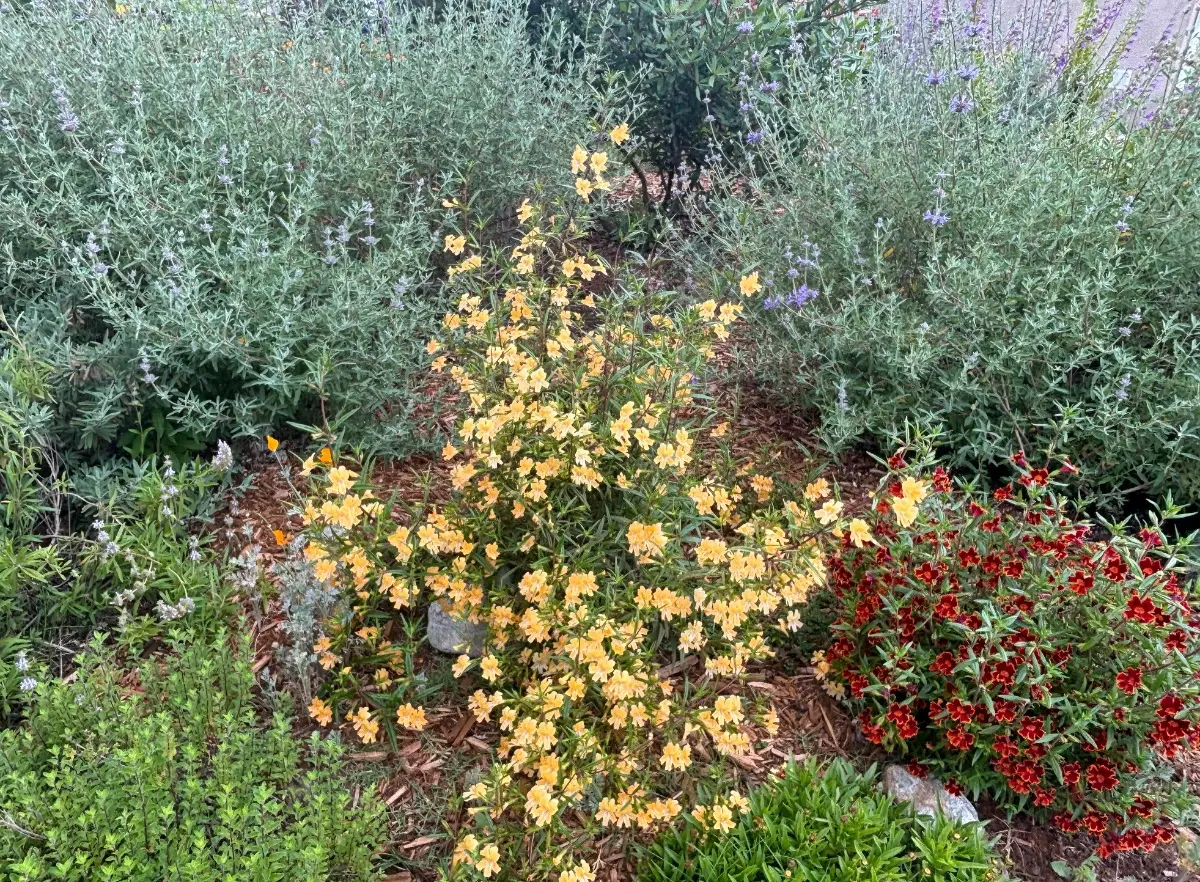
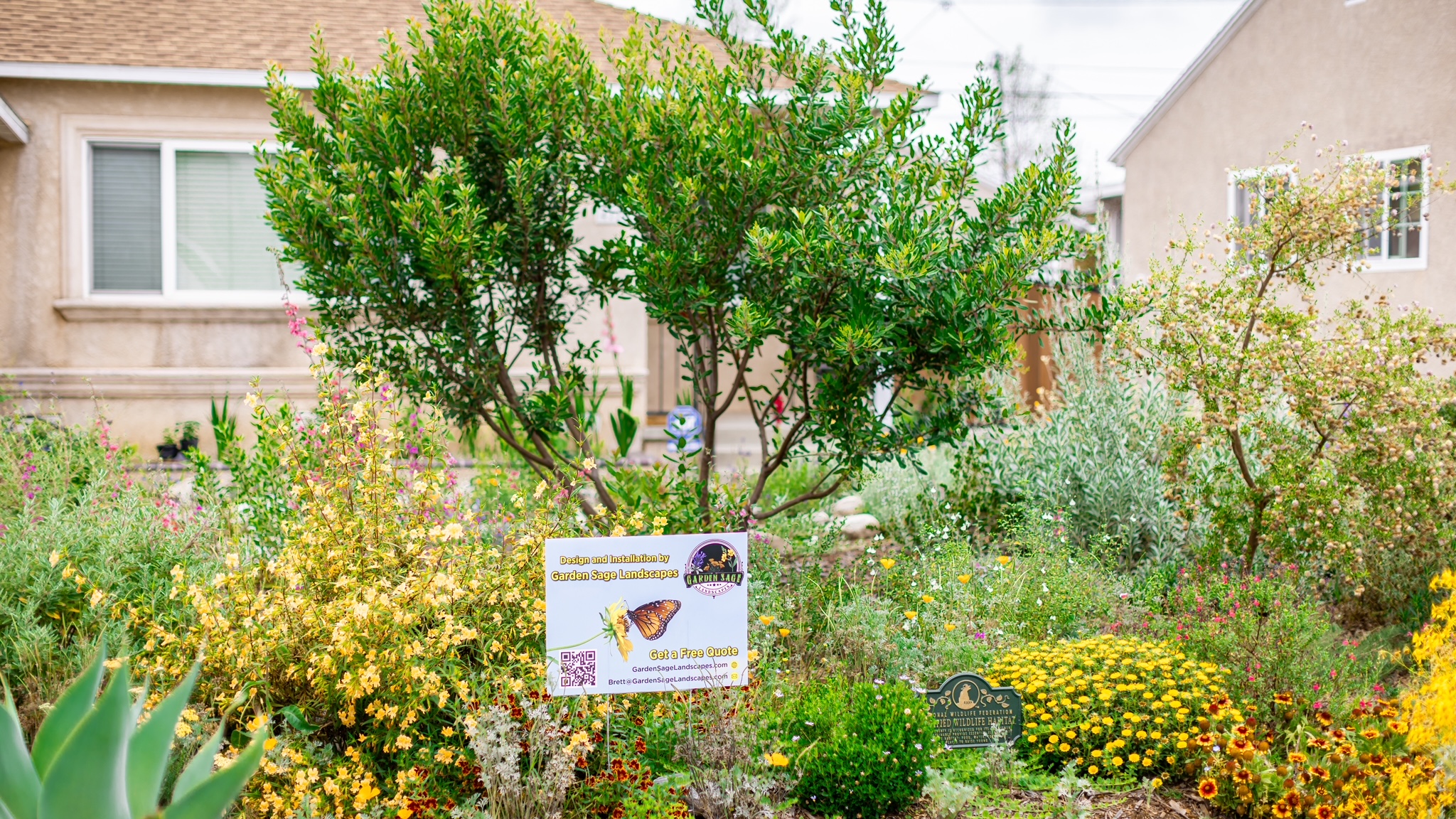
(Click on images to enlarge) Ca Native shrubs and flowering perennials in peak bloom, roughly Early April. Two Salvia clevelandii (Cleveland Sages) in the back frame Diplacus aurantiacus (Monkeyflower) in the center, creating a wonderful contrast of color that pops! In the foreground, a bi-color Monkeyflower, Coreopsis, and Coyote Mint create a layered effect where plants start out shorter near the garden border and progress to taller plants in the back.
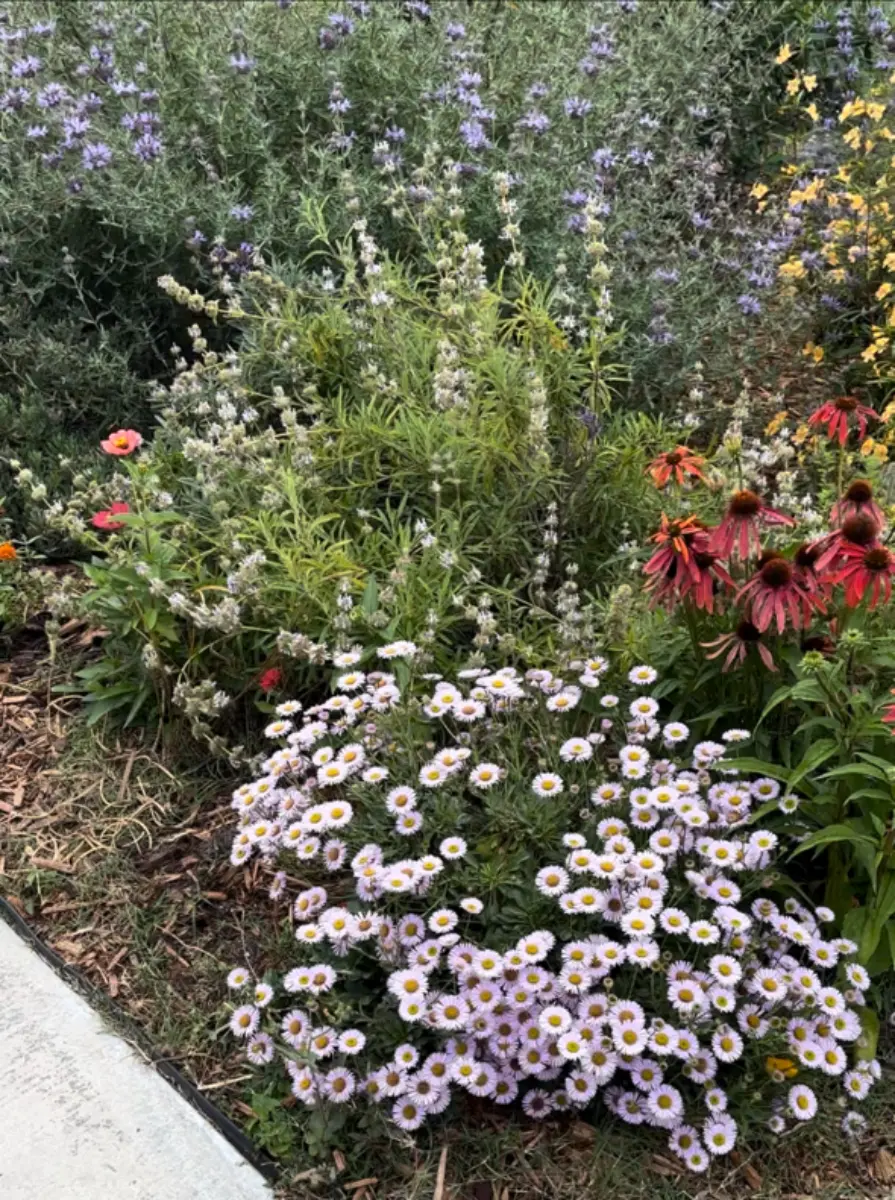
A mixed perennial border of mostly native pollinator plants provides tons of color and nectar for butterflies, bees, and hummingbirds. Featured Plants (not mentioned in previous picture):
Erigeron glaucus ‘Wayne Roderick’ (CA Native)
Salvia mellifera (CA Native)
Echinacea ‘Cheyenne Spirit’ (US Native cultivar)
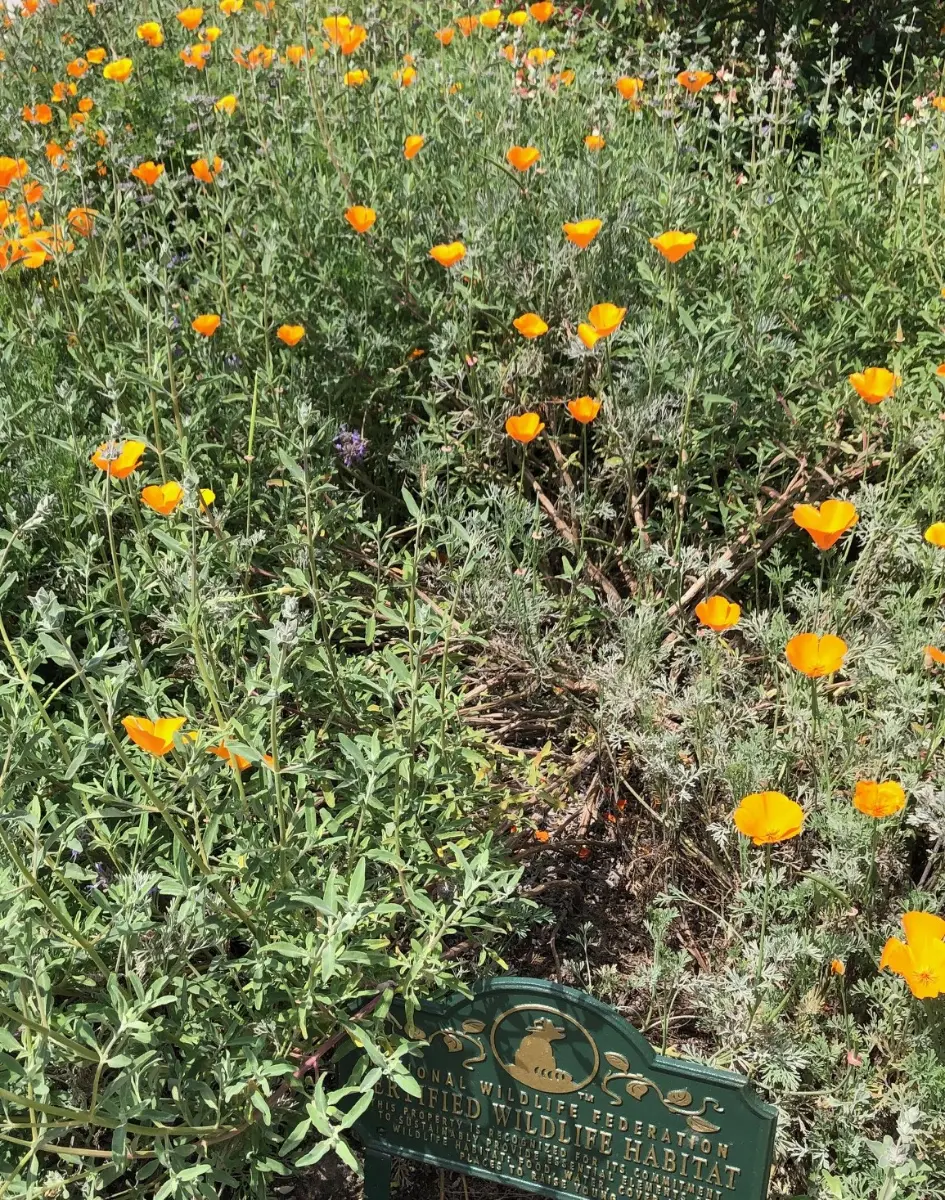
Mid-Planting, prior to application of mulch. The ground in between plants was seeded with California Poppy to provide seasonal color as the other plants grow in.
California Poppies grown from seed in order to provide massive color and wow factor in the gaps between plants for the first year as they are filling in. Poppies will be thinned out after blooming and dropping seed for next year.
Years after the initial planting, the plants are still thriving with just seasonal maintenance. The Toyon in the center which was planted as a 15 gallon plant was pruned over time into a small, multi-branched tree form. One of the best things about a native perennial garden with annual wildflowers is watching it grow and change over time, varying with the seasons. While its far lower maintenance and lower water than a grass lawn, it’s still important to do monthly or seasonal maintenance in order to freshen up the garden as it changes throughout the seasons and cut back specific plants when it is the correct time to do so. Regular maintenance is available at an hourly flat rate and is recommended after landscape remodels or new landscape installations.
CA Native Rock Garden (Partial Shade to Mostly Shade)
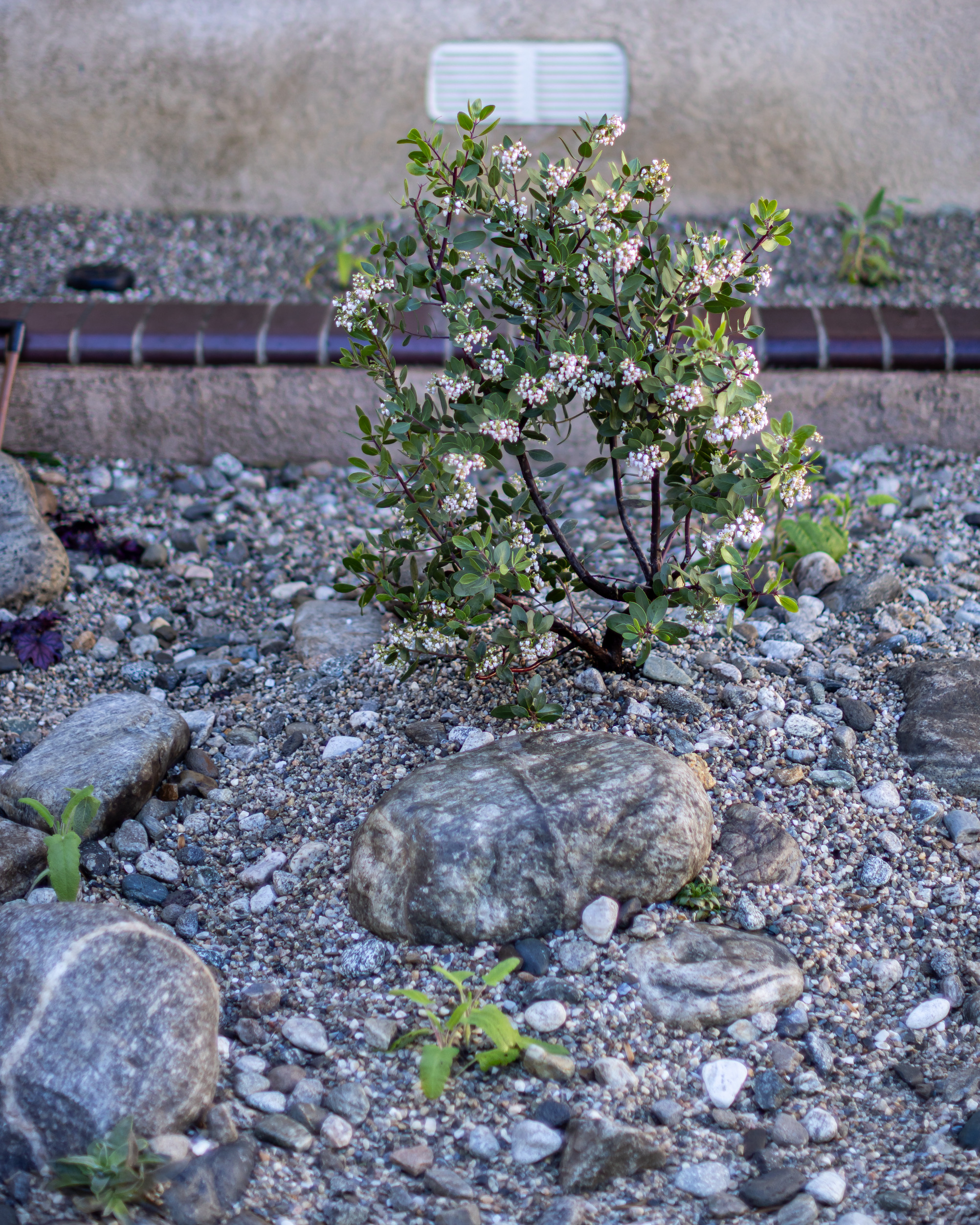
‘Austin Griffiths’ Manzanita is an eye-catching centerpiece in this CA Native Rock Garden. Small plugs of Hummingbird Sage will grow in to create lush highlights of green foliage and pink flowers on 1-2 foot tall inflorescences that are adored by Hummingbirds.
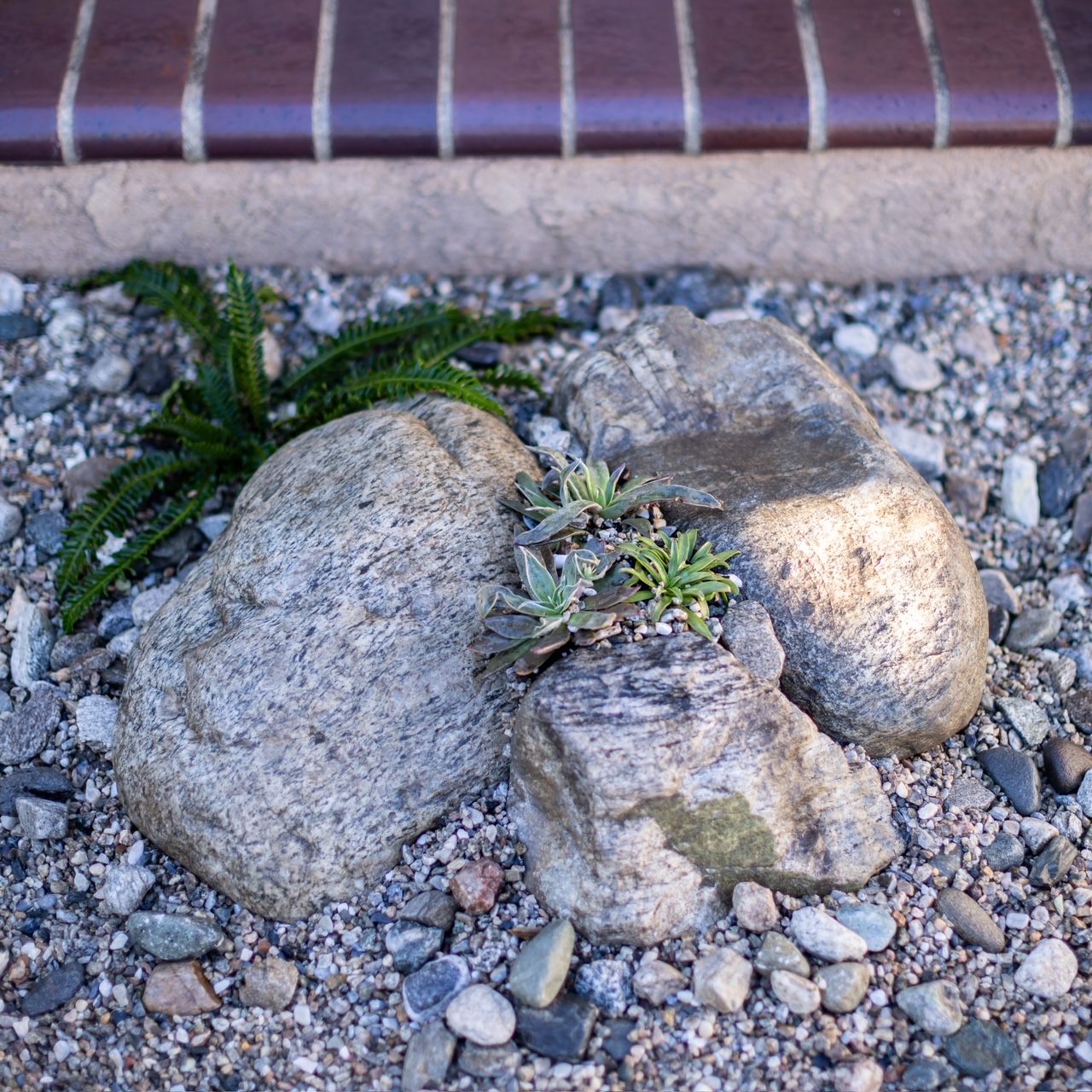
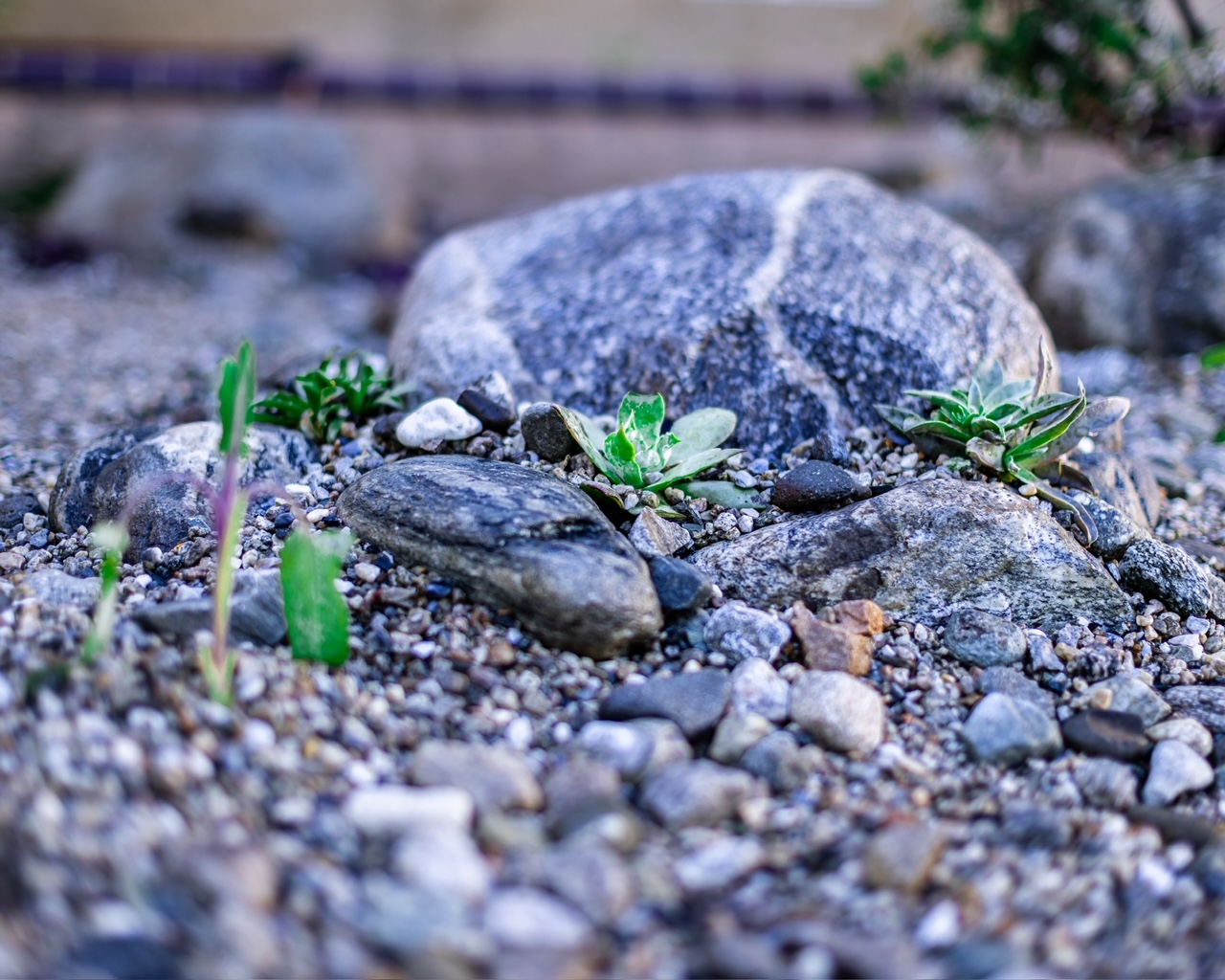
CA Native succulents (Dudleya lanceolata, Dudleya farinosa, and Lewisia longipetala) grow between large granitic stones, as they often would out in their natural habitat. A native Deer Fern grows from the shadier side of the rocks. This design was inspired by plants I encountered while hiking in Rubio Canyon, Altadena prior to the wildfires (Dudleya lanceolata and Polypodium californicum growing in the same way, with the Dudleyas emerging from cracks in the rocks and the ferns growing from the shadier side of the stones).
Native/Naturalized Garden, Butterfly Garden, Walkable Landscape with Flagstone and Dymondia Groundcover
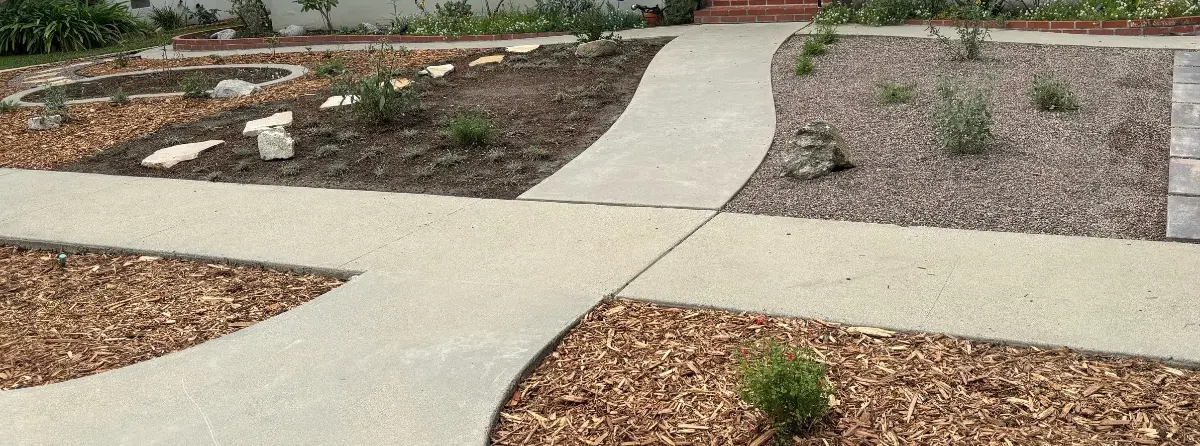
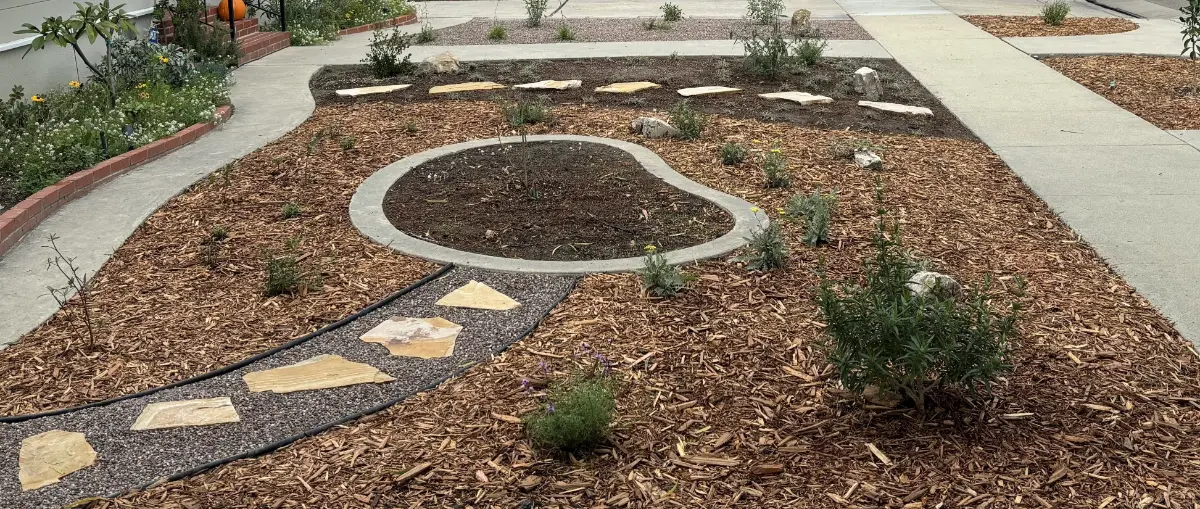
9/22/25 – First two pictures depict initial planting and landscape remodel – This pollinator garden landscape combines CA natives and naturalized plants for year-round nectar and color. Featuring two flagstone paths, Dymondia groundcover (still filling in), and a raised edible garden bed (shown in third and fourth pictures), this newly planted landscape is walkable, functional, interactive, and beautiful. In the center is a currently dormant Matilija Poppy, also known as a Fried-Egg Plant. Narrow-Leaf Milkweed acts as the host plant for Monarch Butterflies and Butterfly Bush, Yarrow, native Sages, and Cedros Island Verbena provide ample nectar for all the butterflies and hummingbirds to come!
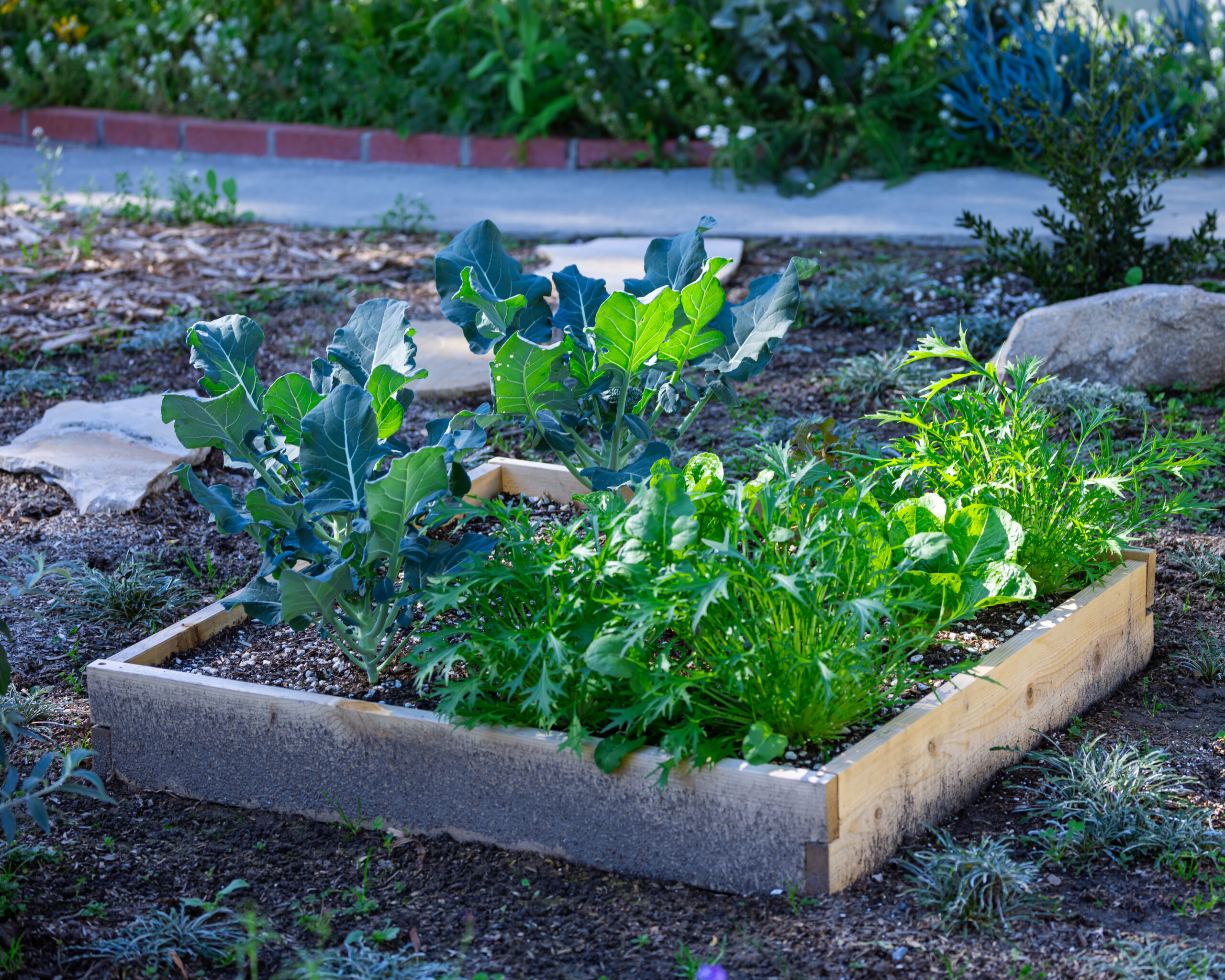
Brocolli, lettuce, and other salad greens make for a nice cool-season crop! This raised garden bed was installed last in the empty space that is shown in the first image of this section. The crops were planted from small plugs (6 pack size) roughly 1-2 months prior to this photo being taken. Nothing beats doing some edible gardening in the middle of a pollinator garden!
Achillea ‘Moonshine’ (Moonshine Yarrow) growth progress, roughly 1-2 months after planting from 1 gallon pots. Ca native wildflowers from seed are also beginning to sprout.
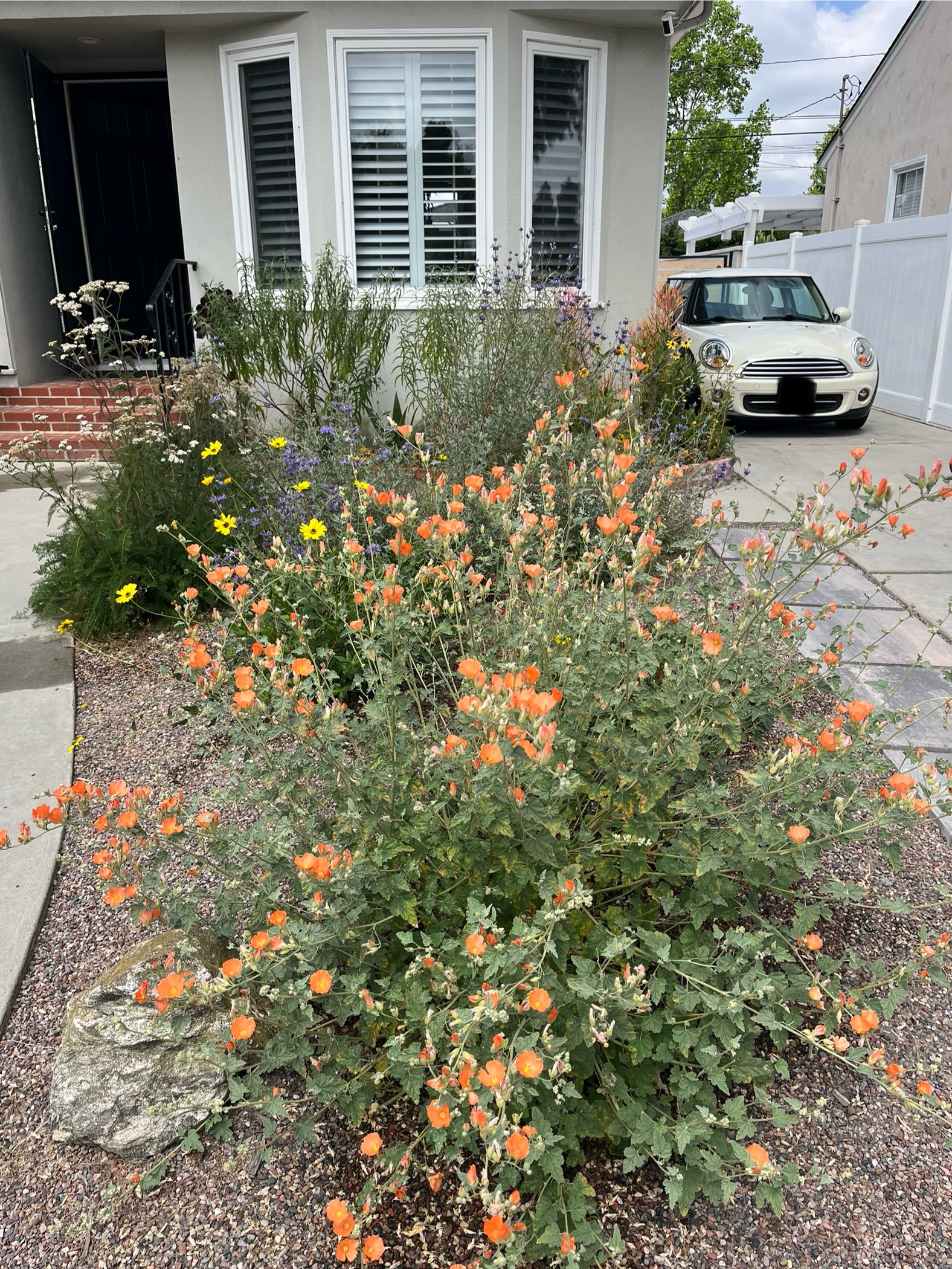
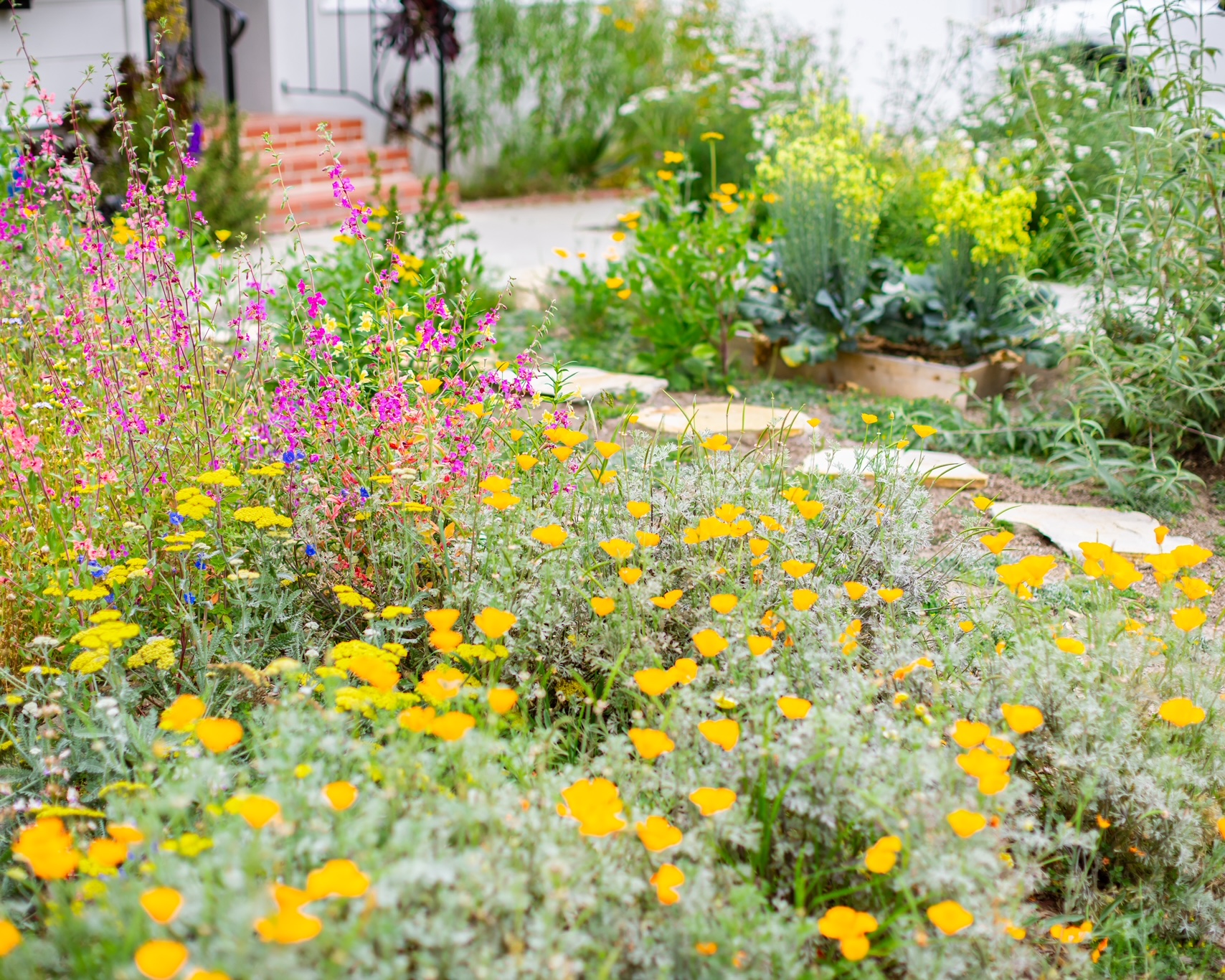
4/1/2026 All the wildflowers seeded during the initial planting have bloomed! The Dymondia groundcover is still filling in around the stepping stones, as it is a fairly slow growing groundcover. When the wildflowers are done for the year in Mid to Late Summer, seed will be allowed to drop to the ground for next Spring’s bloom, some seed will be harvested for reseeding this area and other areas in late fall, and most of the wildflowers will then be pulled out, as they will be drying up and done for the year. Then the garden will have a much cleaner and spaced out look for fall and winter, allowing more room and light for the perennials to grow and flourish, until new wildflowers begin to sprout again from seed with next Winter’s rains. A mostly native perennial garden with native annual wildflowers is a wonderful way to provide year-round seasonal interest and vibrancy to your landscape.
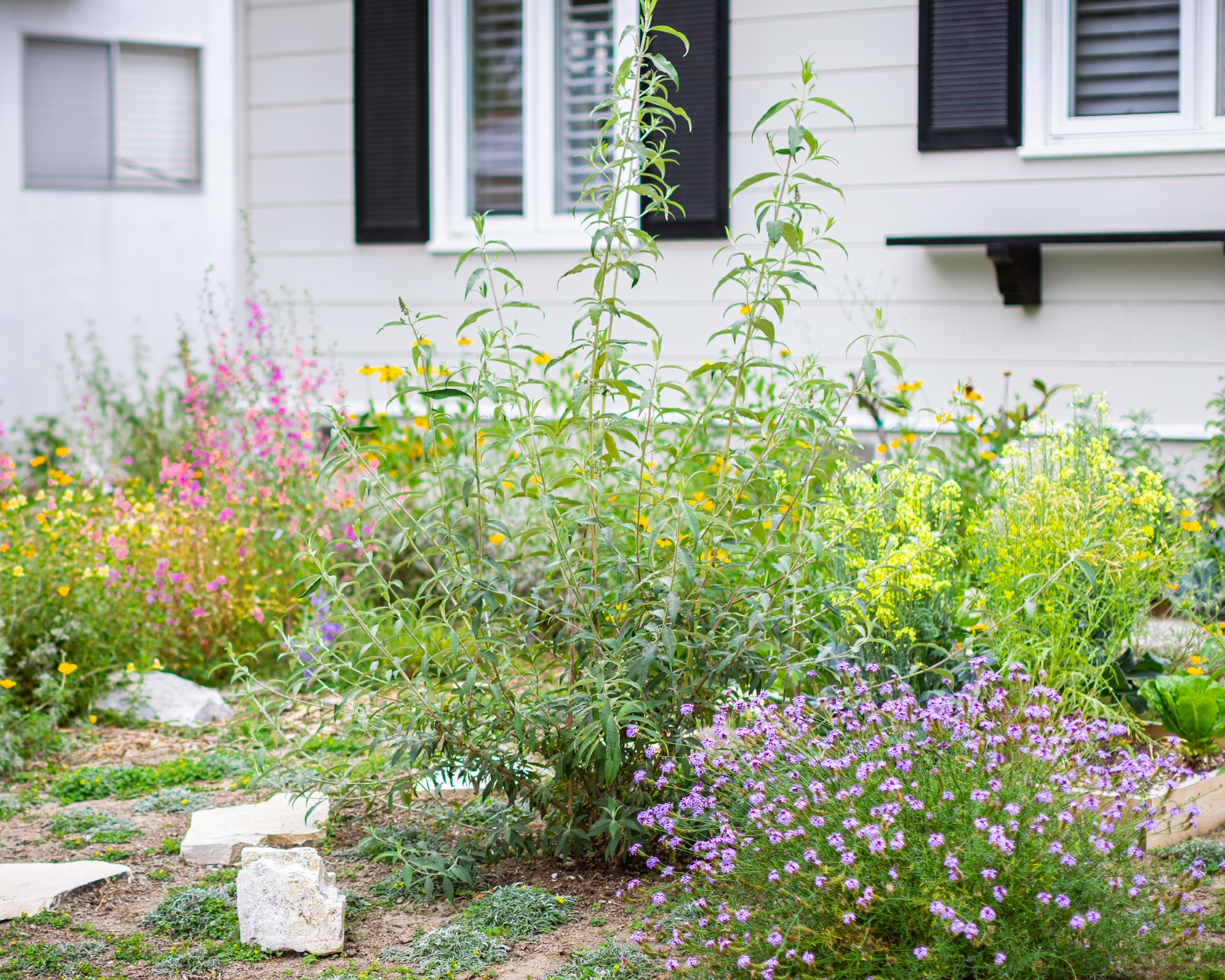
4/1/2026 Showing off how much growth a Butterfly Bush can put out in just roughly 5 months since planting from a 5 gallon plant. The plant is now budding and will be in full bloom within the next month! The Cedros Island Verbena in the bottom right foreground has been blooming non-stop since it was planted in November, and the local Monarchs, Gulf Fritillaries, Skippers, Sulphur Butterflies, Duskywings, and Painted Lady Butterflies have all been enjoying its nectar during that time.
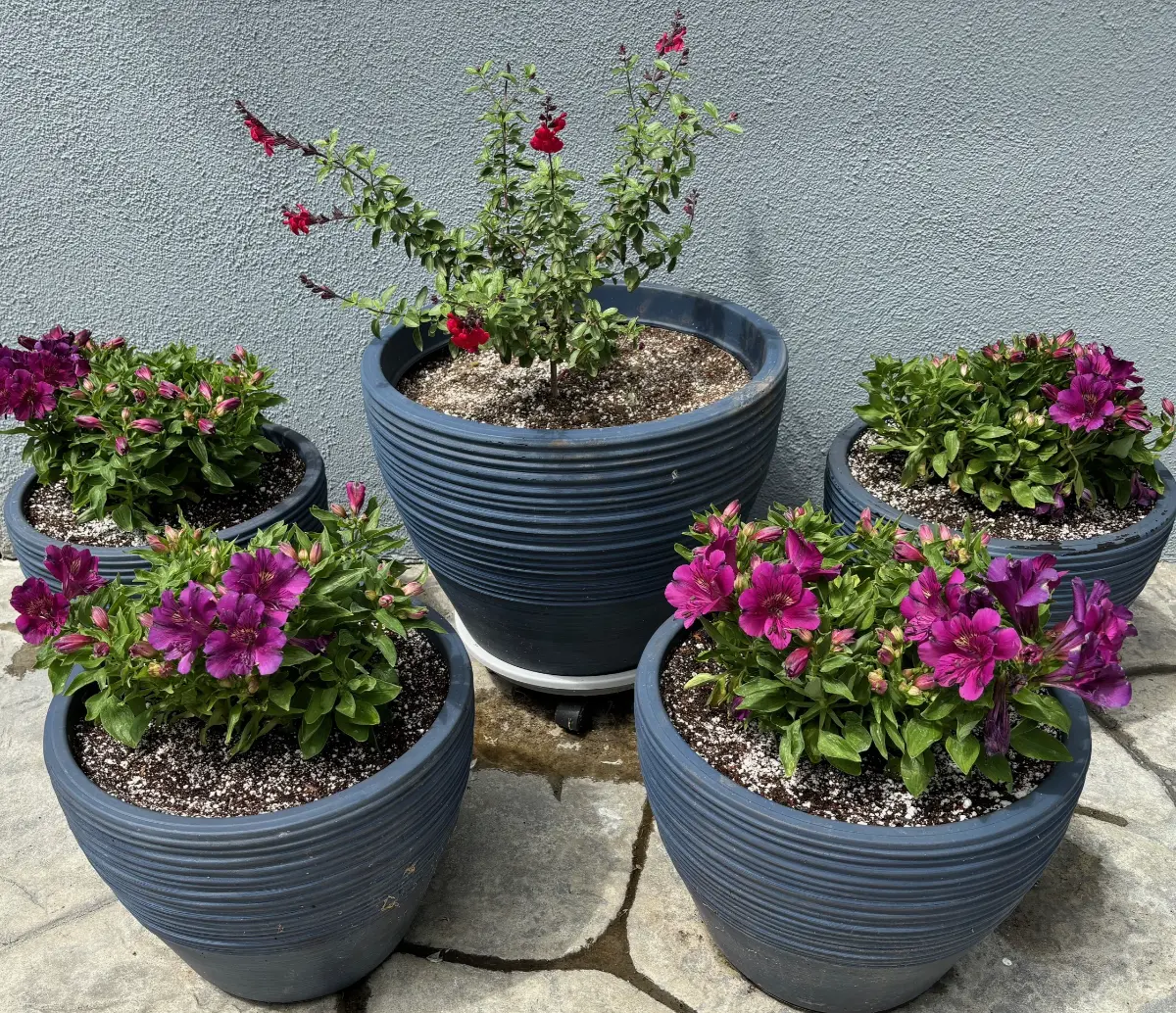
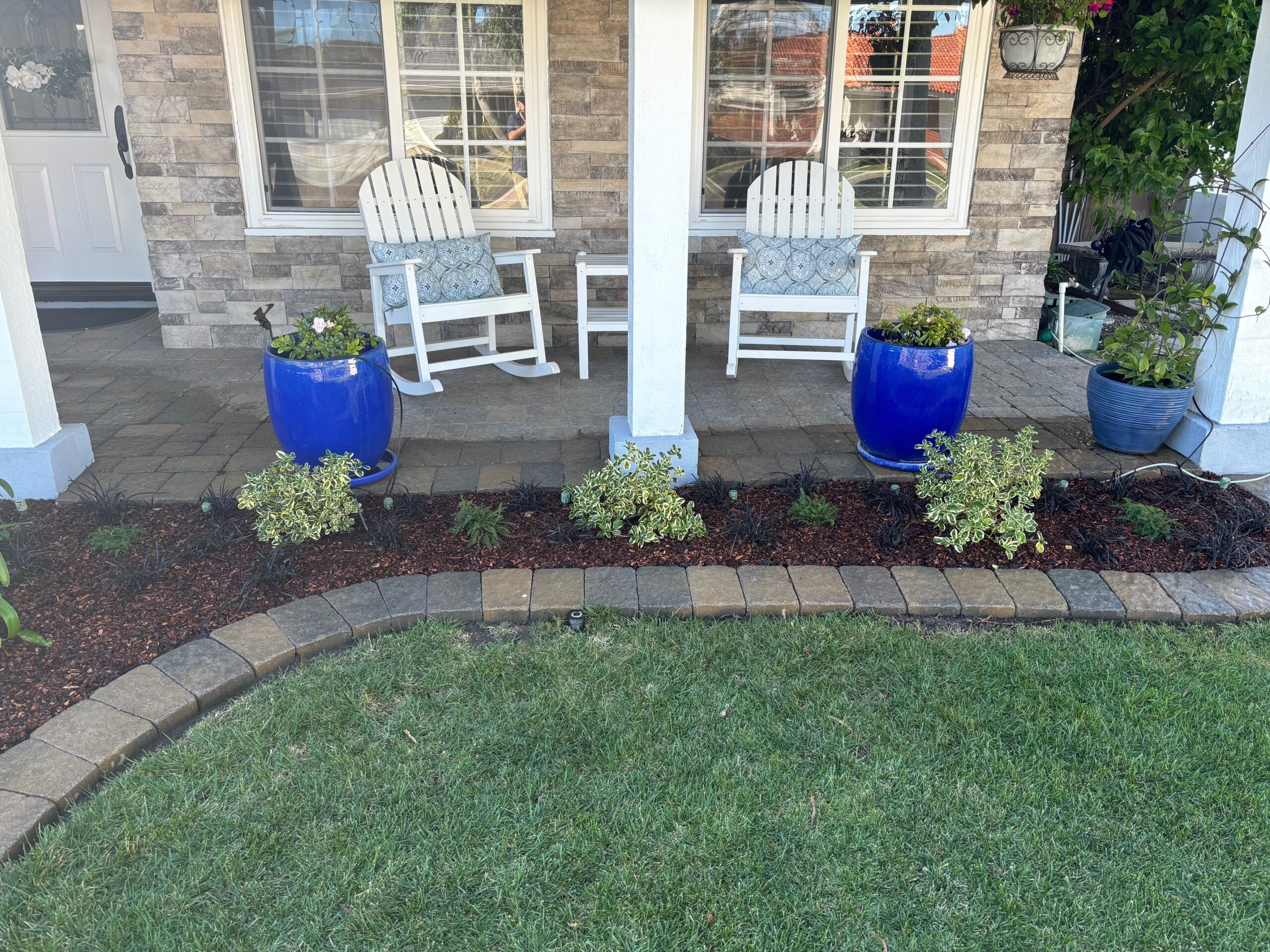
Container Plantings
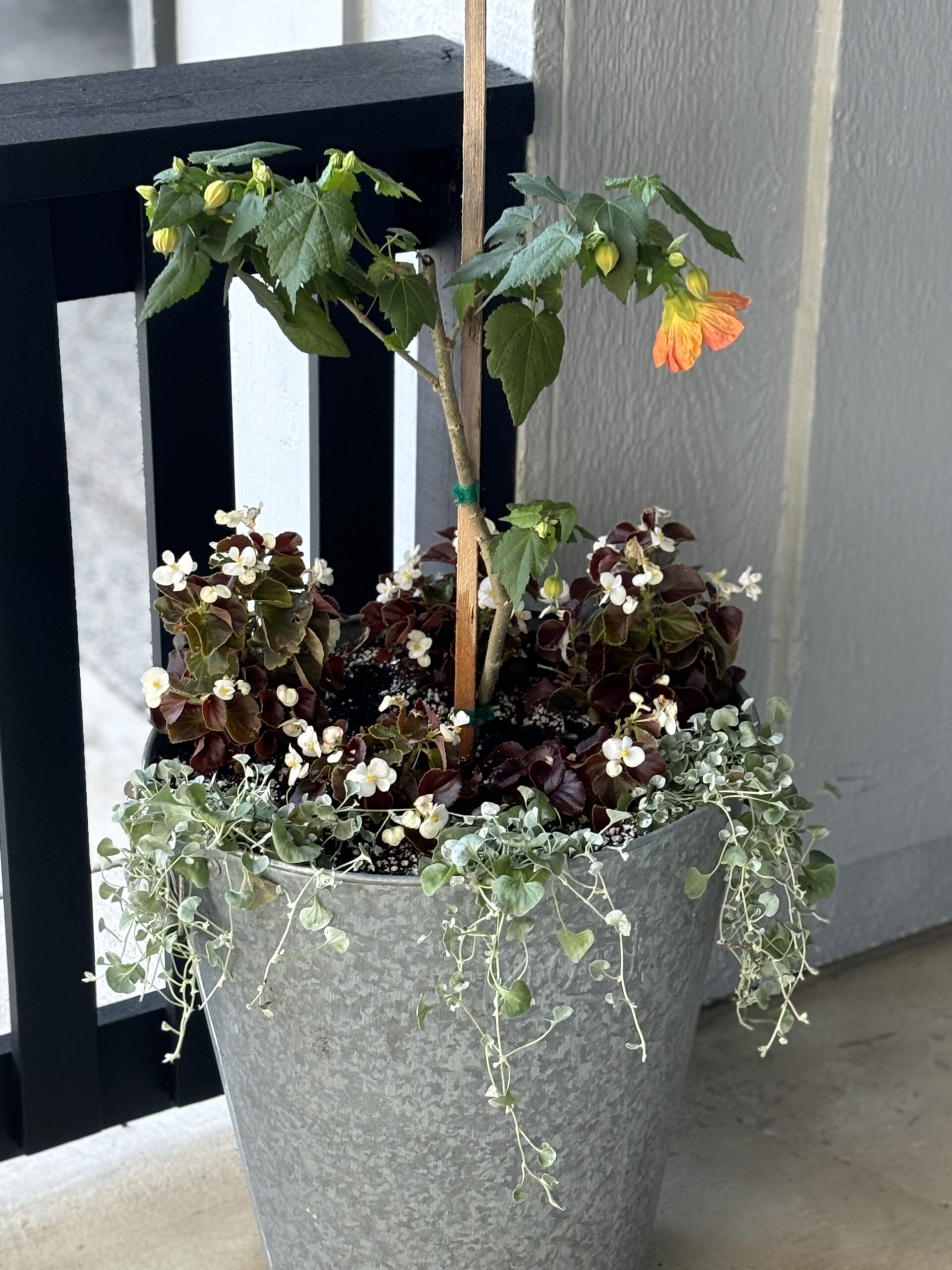
A classic “Thriller, Filler, Spiller” planting for a mostly shade, part sun area makes a beautiful statement near the entry way of a home.
Thriller -Abutilon ‘Victor Reiter’ (Flowering Maple, Chinese Lantern Plant)
Filler – Begonia semperflorens (Wax Begonia)
Spiller – Dichondra ‘Silver Falls’
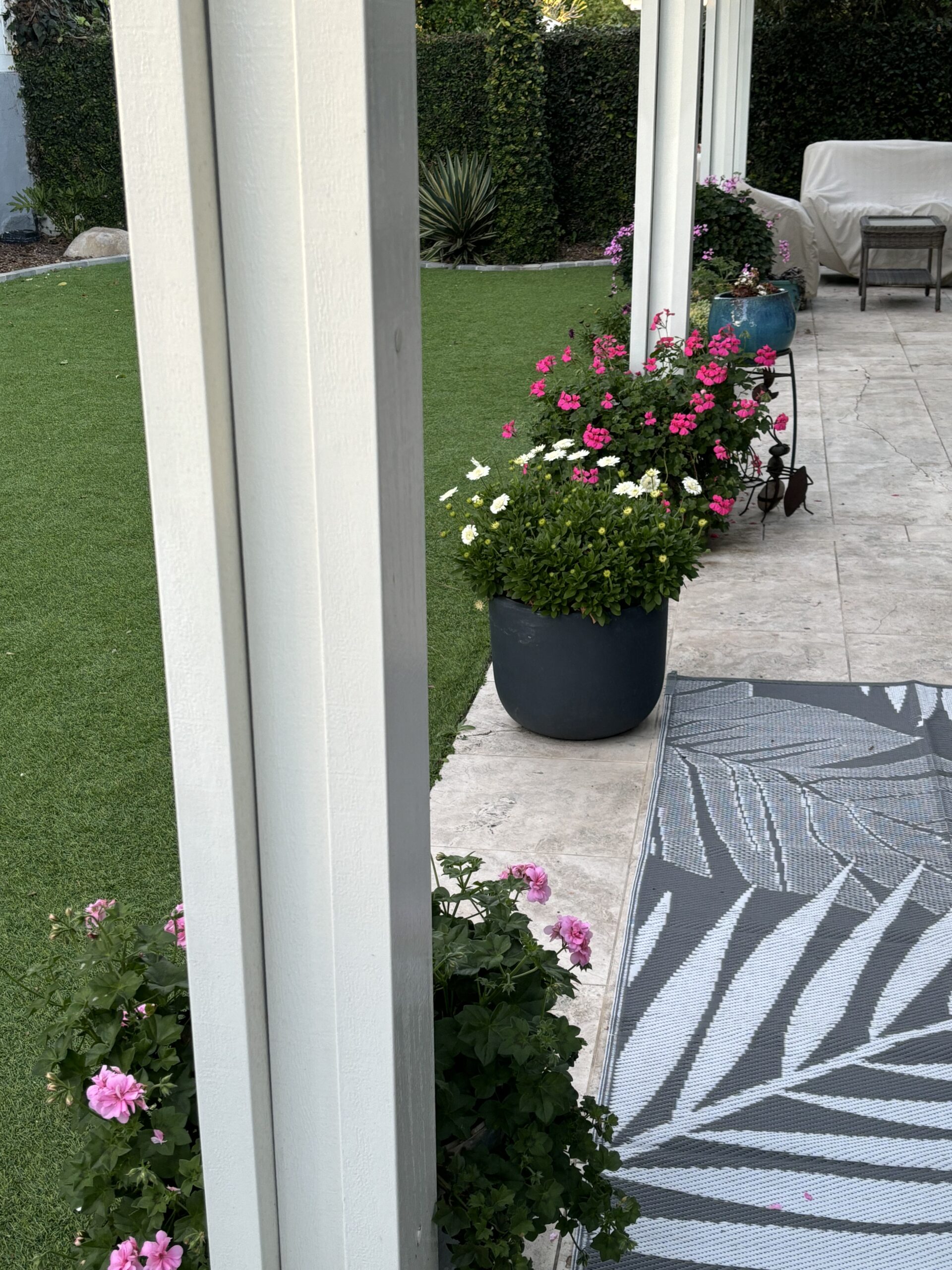
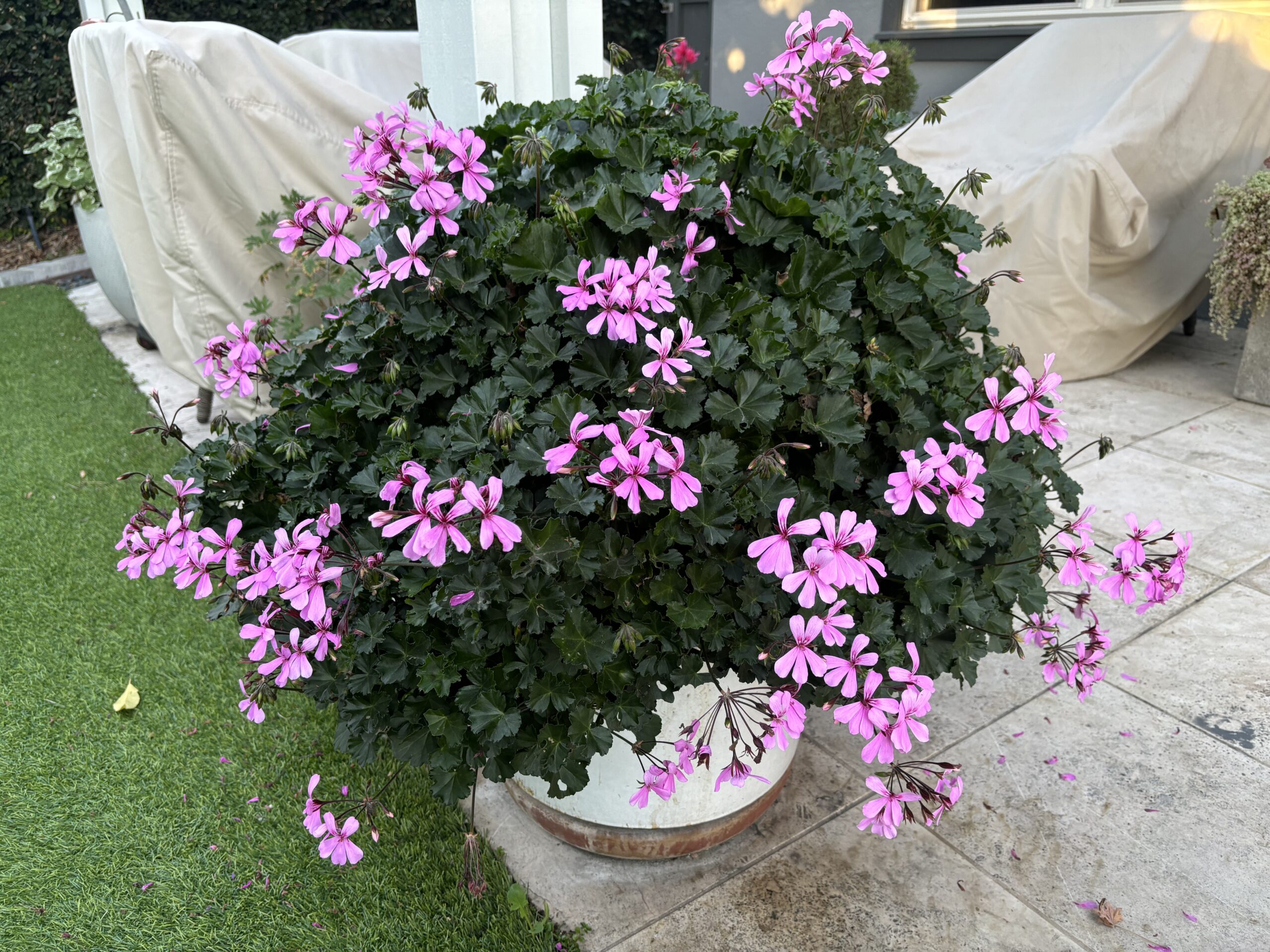
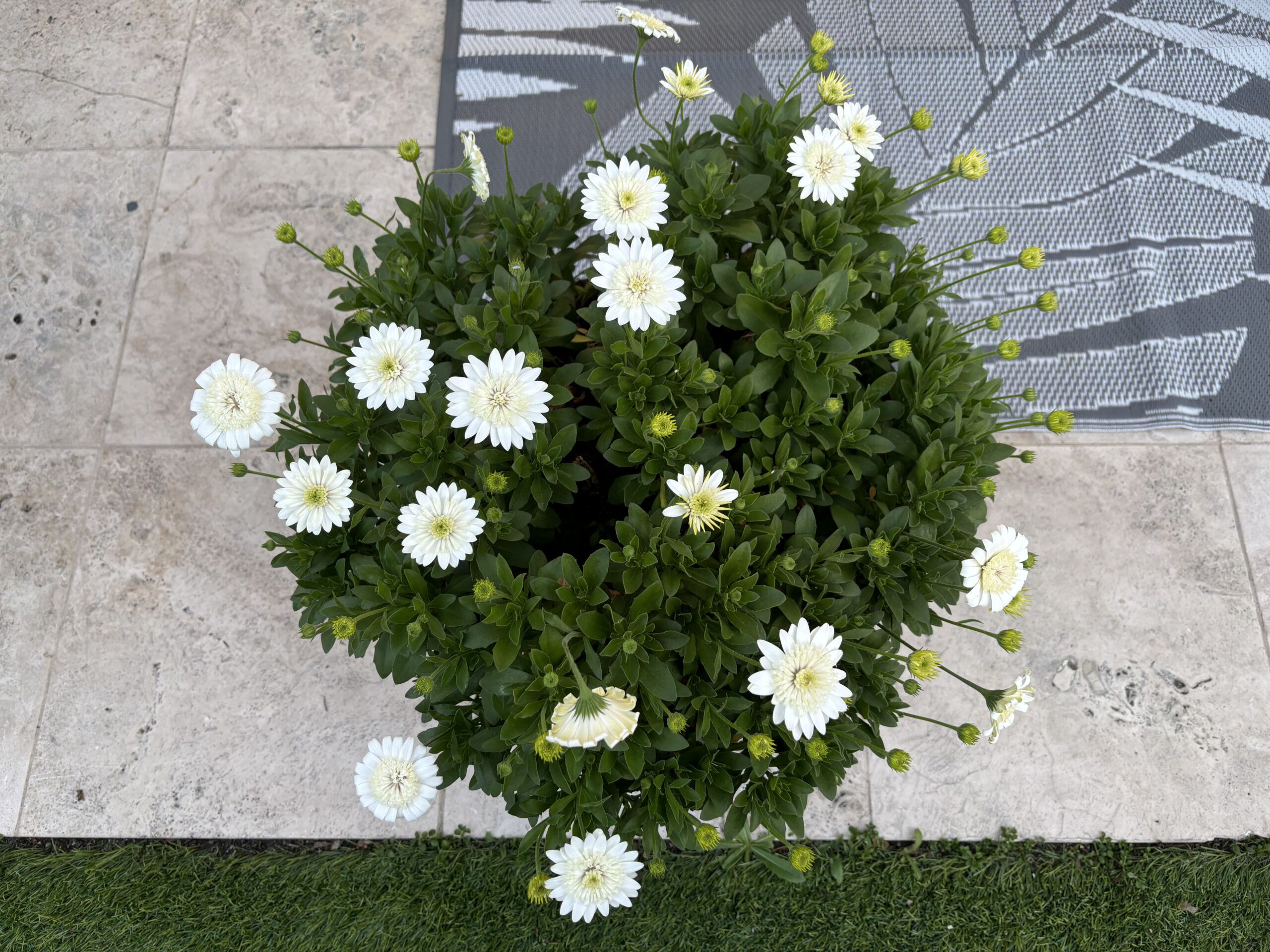
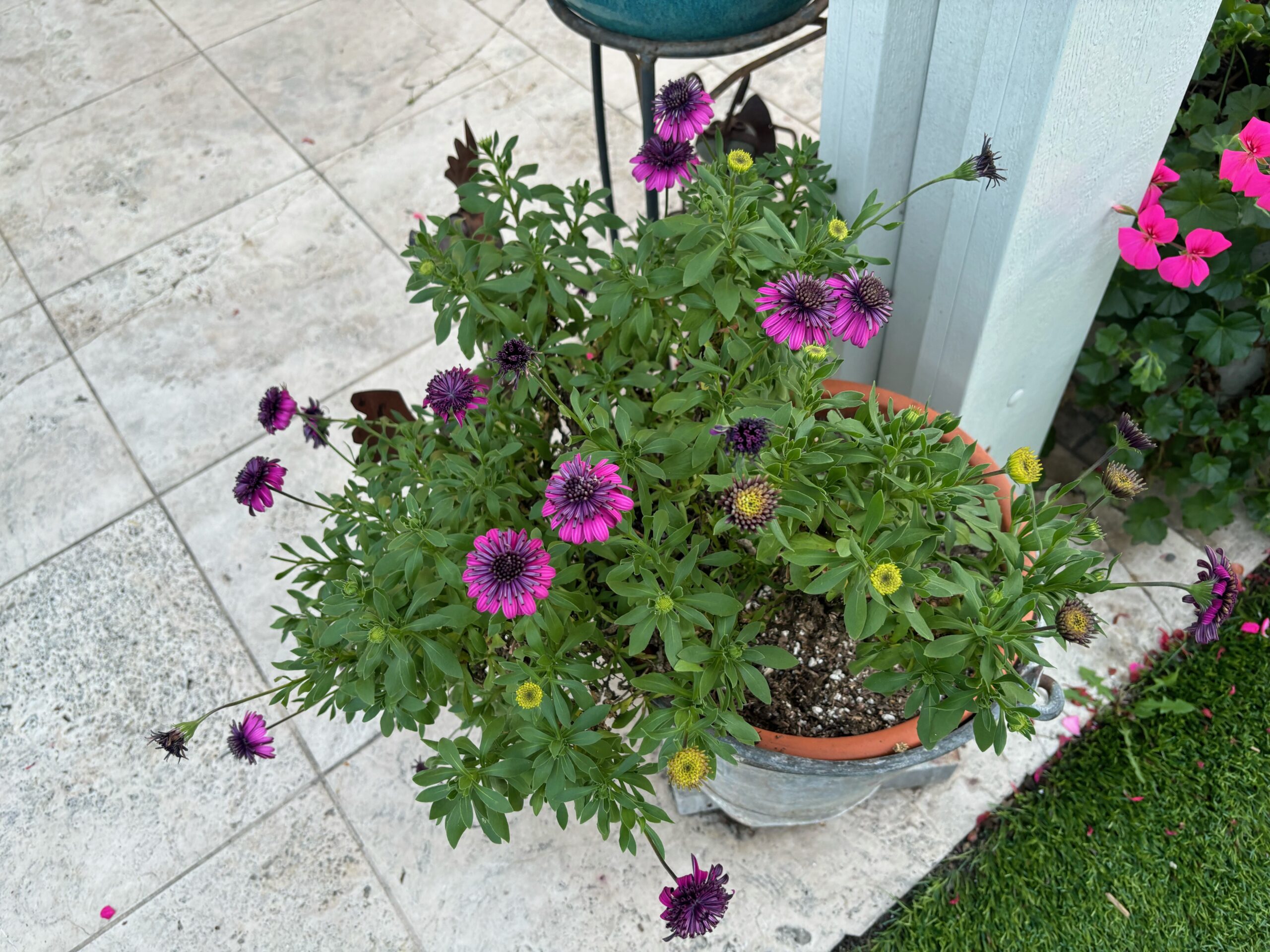
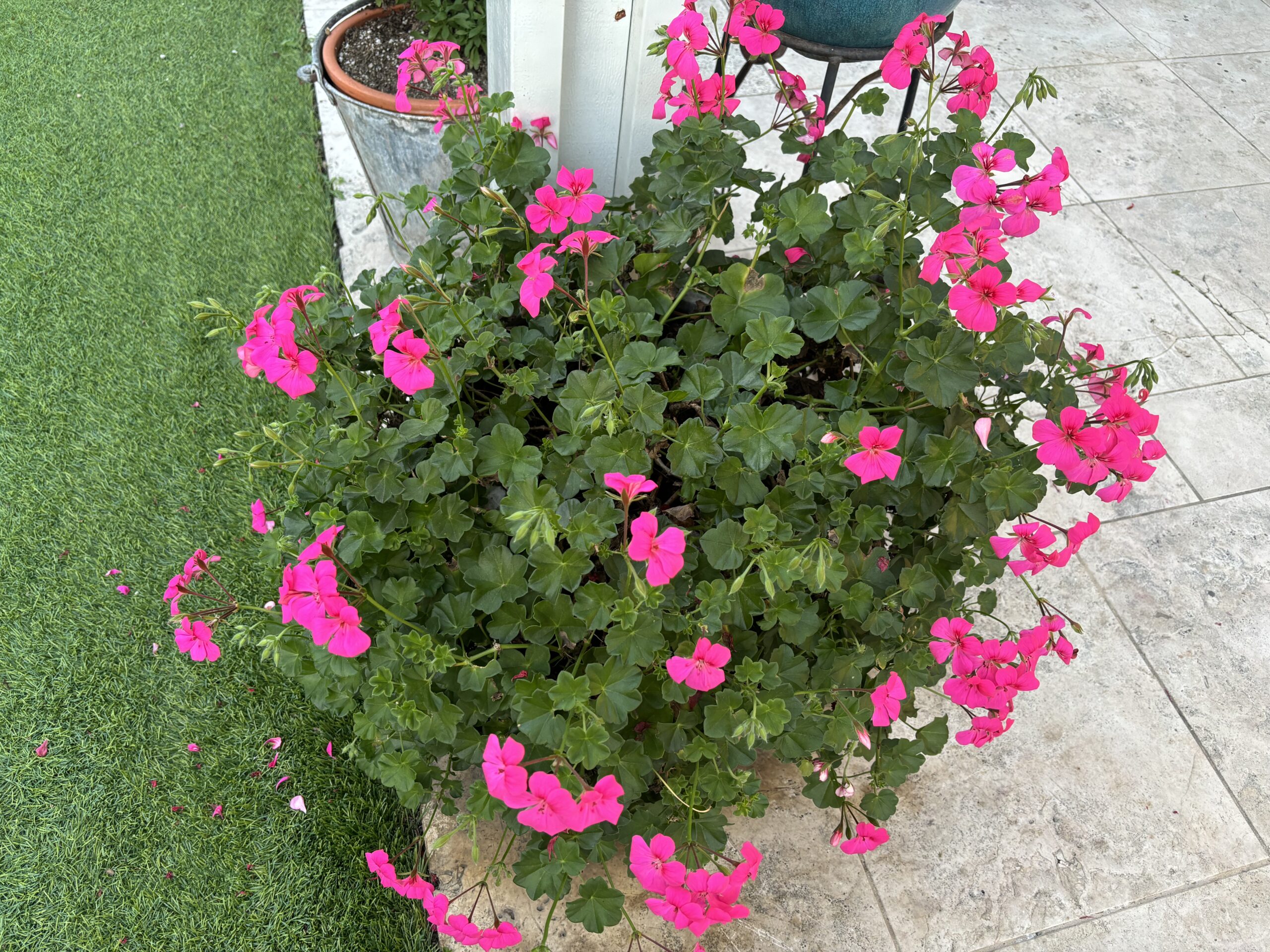
Zonal Geraniums, Ivy Geraniums, and African Daisies light up this backyard seating area. This picture was taken in Late January, and the plants are already in full bloom and thriving from regular maintenance.
Mostly Shade Garden with Container Plants in Sunny Spots
Even heavy shade or filtered-sun conditions are no problem! This more classical, structured look enhances the feel of the patio and seating areas while providing lots of color and beauty!
Tropical, Poolside, Privacy Hedge, Topiary, Moon Garden, Mediterranean, Architectural
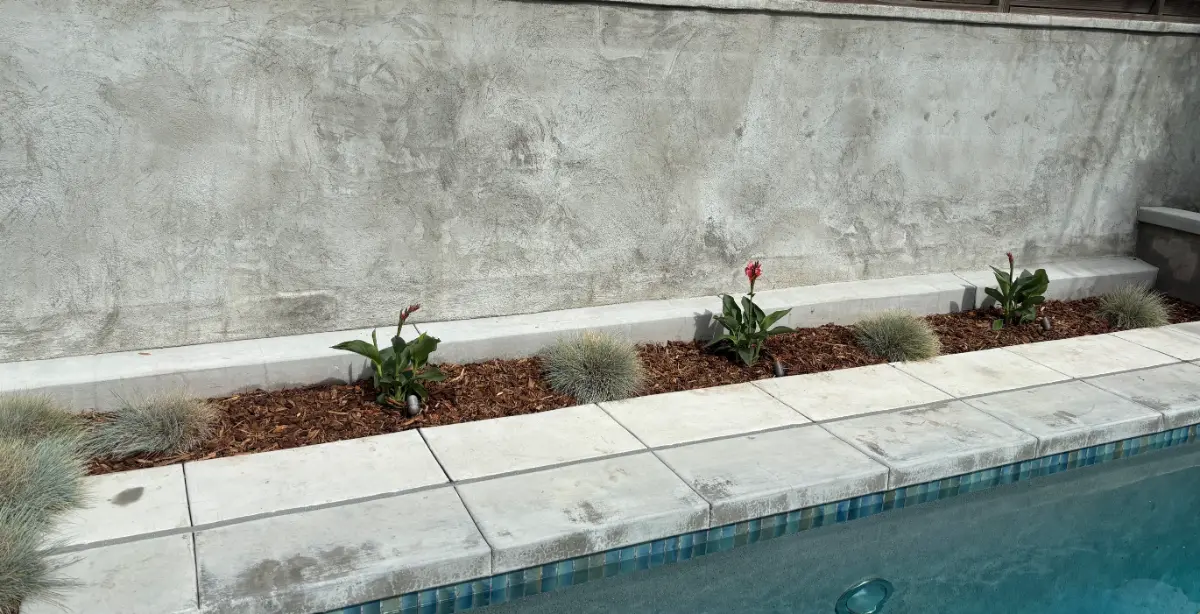
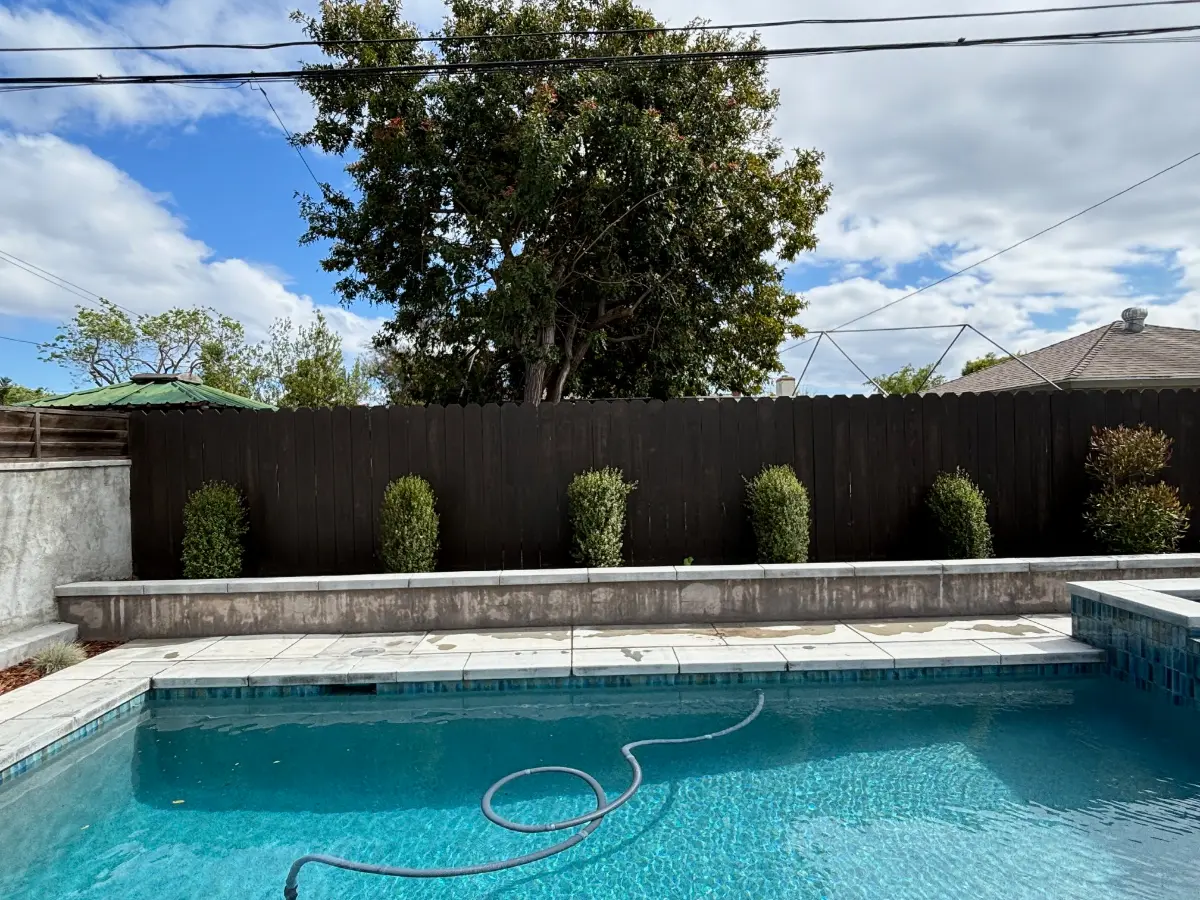
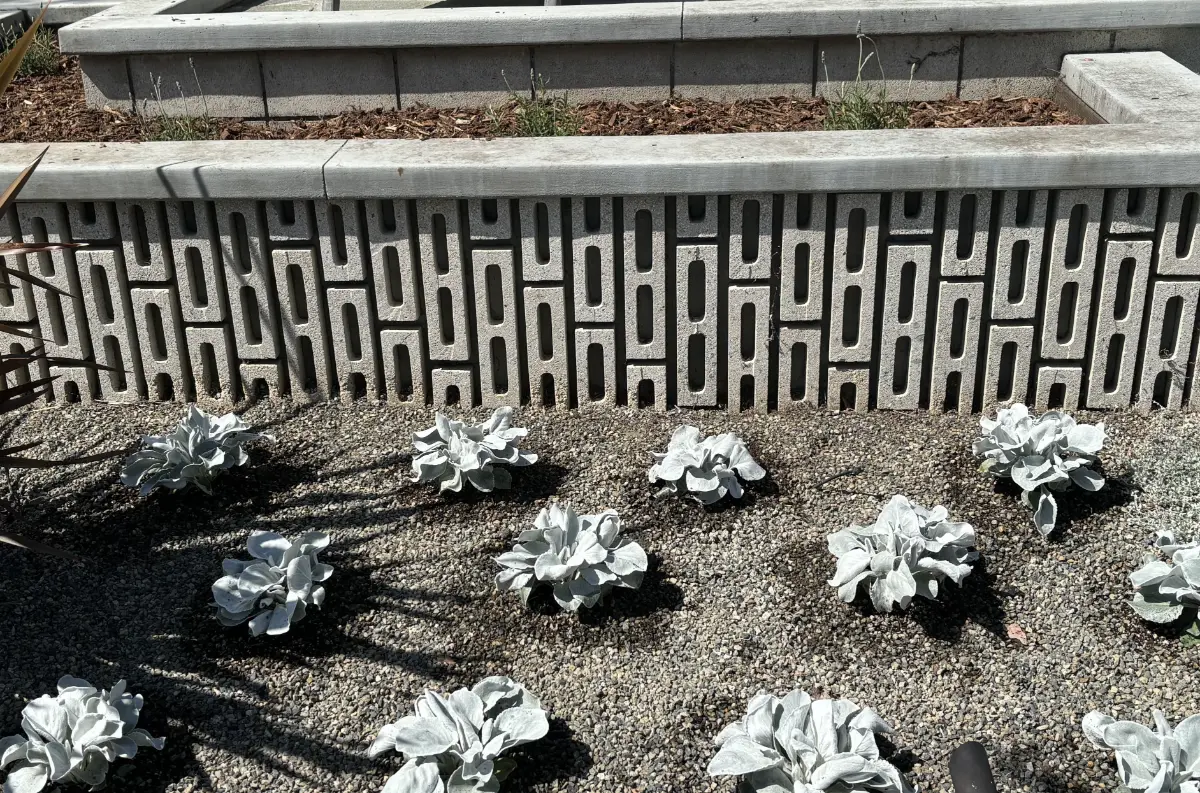
Linear architecture and symmetry give these landscapes a more structural feel. Pittosporum tenuifolium, now a carefully pruned shrub, will grow together to form a dense privacy hedge over time. Just-budding Canna Lillies create a tropical pool-side vibe, and the silvery-foliage of Senecio “Angel Wings” is sure to capture the attention of passerbys on their evening walks.
Small Section Landscape Remodel
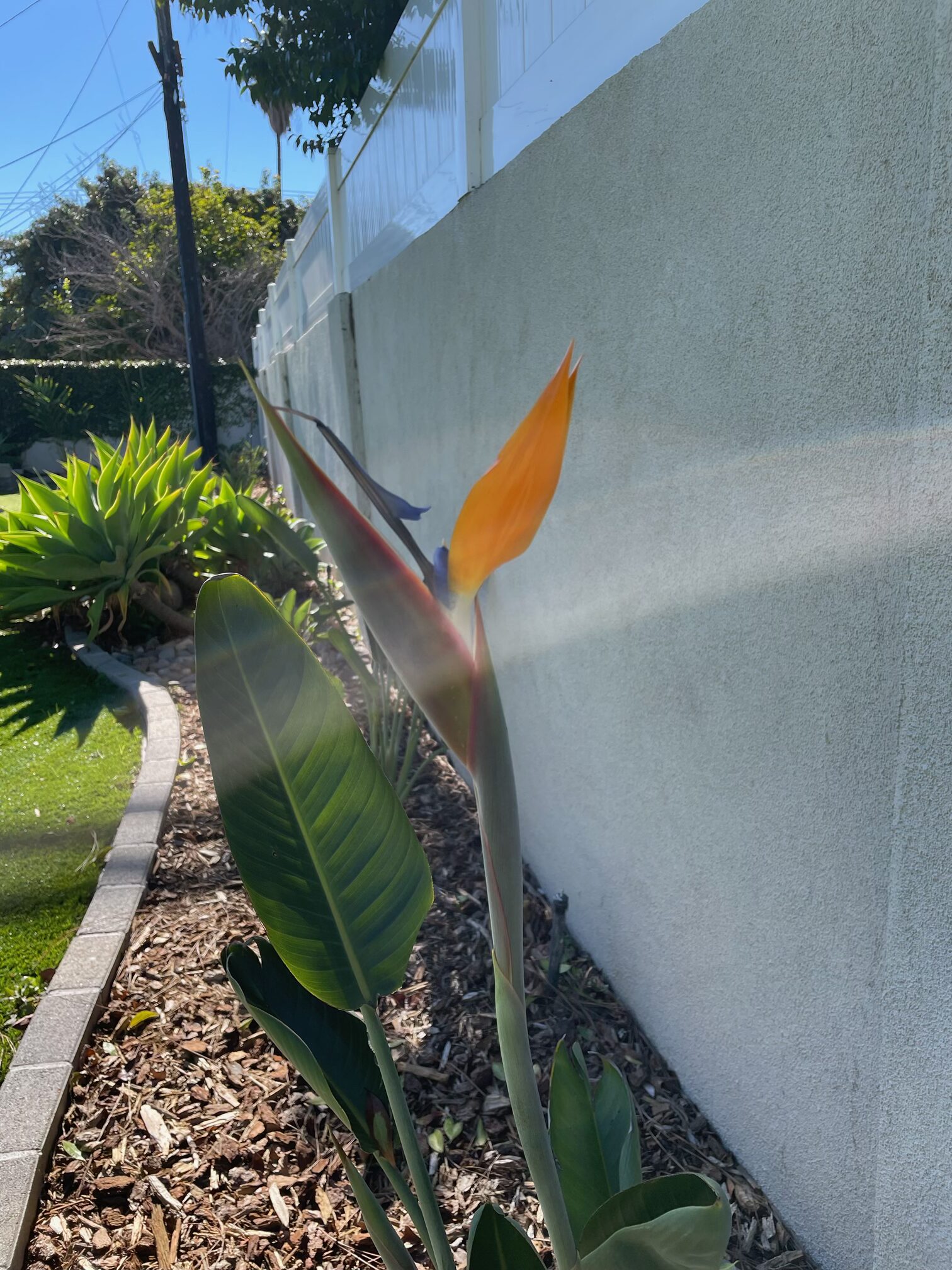
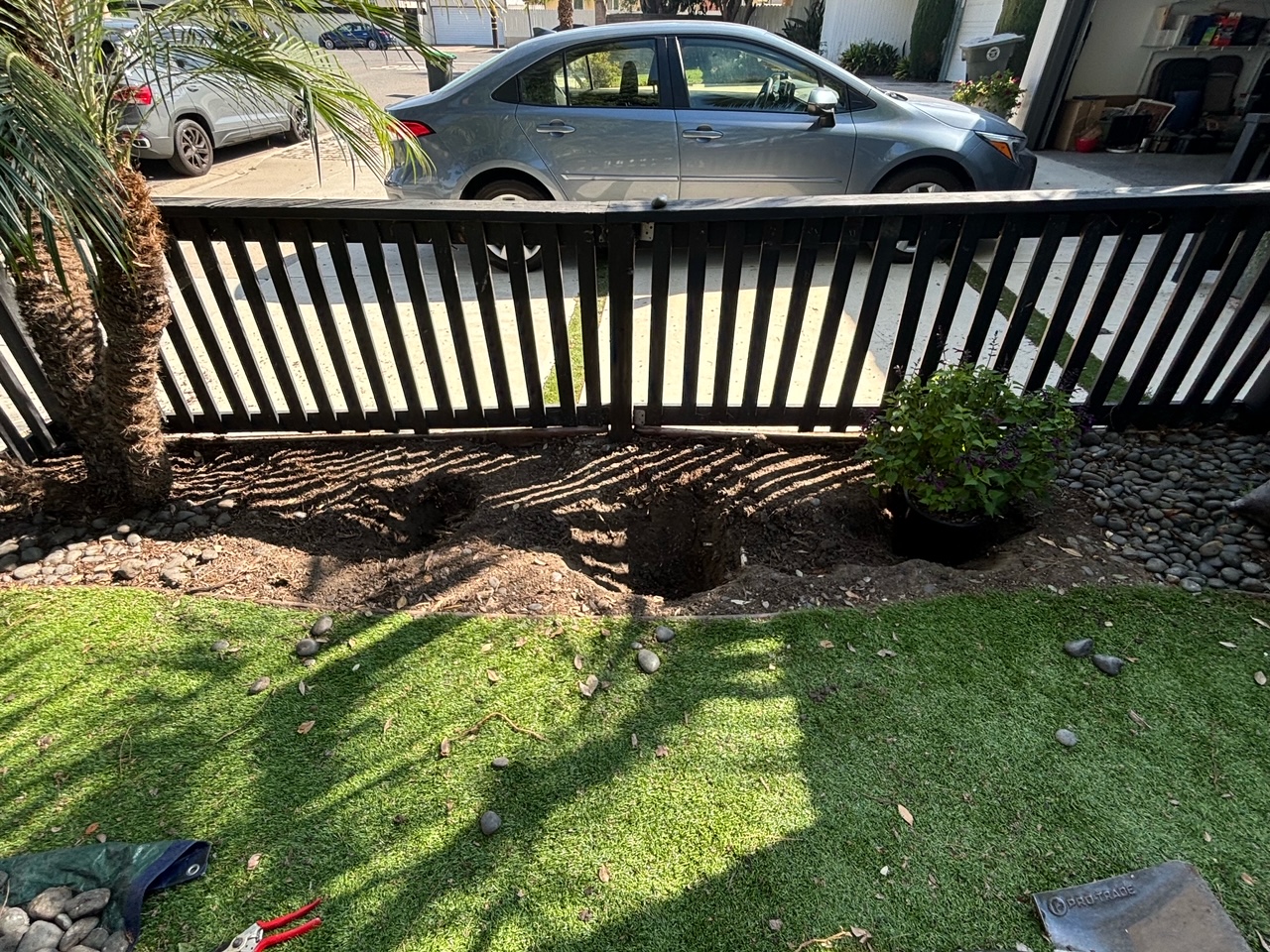
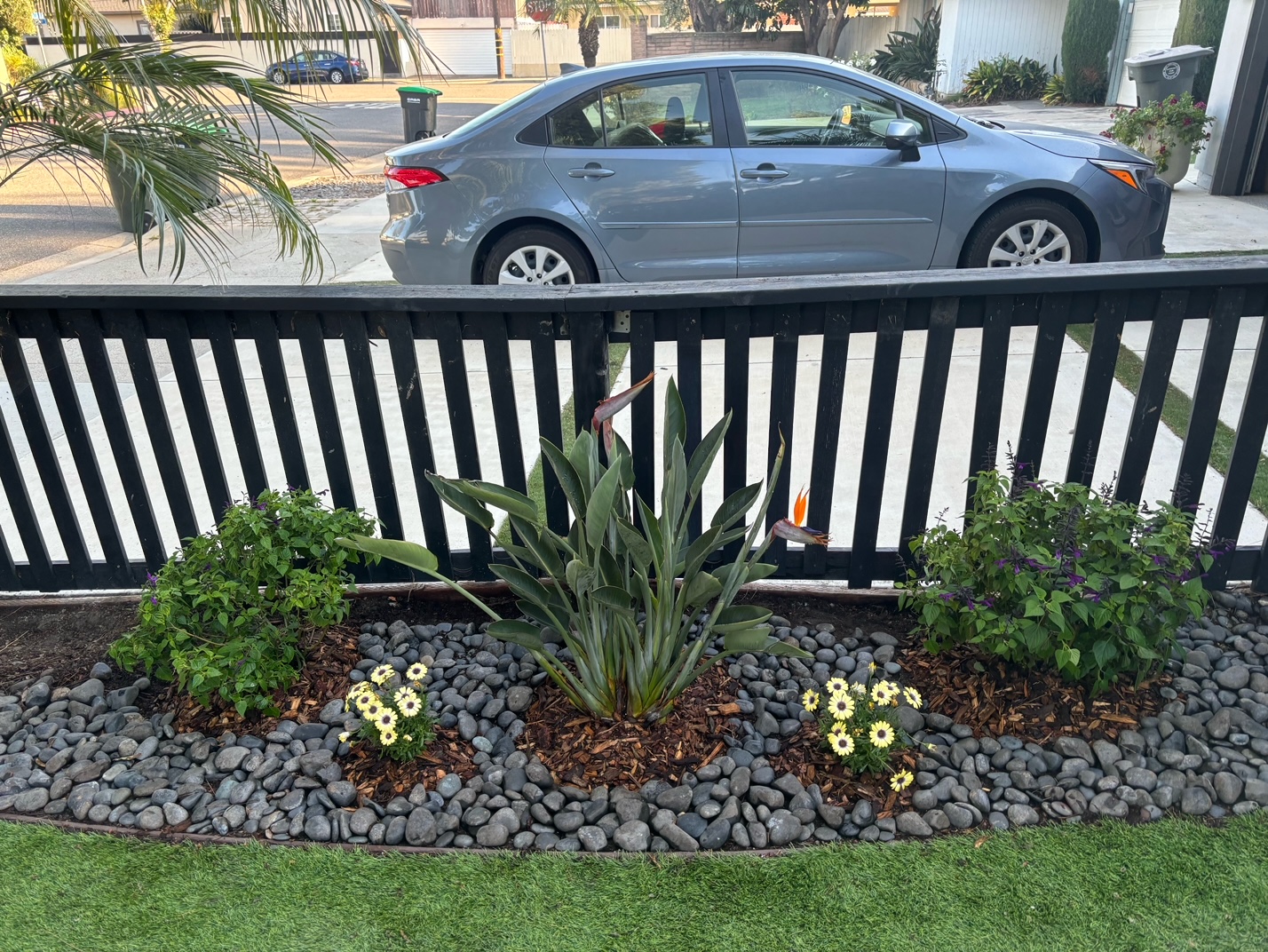
Showing the planting process. Holes are dug to be wider than the pot in order to add planting mix and starter fertilizer, ensuring that plants get off to a great start and thrive! A sprawling and woody Star Jasmine vine that was growing on this fence was removed to create this yellow, orange, and purple themed design that pops and matches the client’s front door!
Plants:
Strelitzia reginae (Bird of Paradise)
Salvia ‘Amistad’ (Friendship Sage)
Osteospermum ‘Blue-Eyed Beauty’ (Blue-Eyed Beauty African Daisy)
Picture will be updated as plants get established and put out more blooms!
Big Japanese Maple Planting
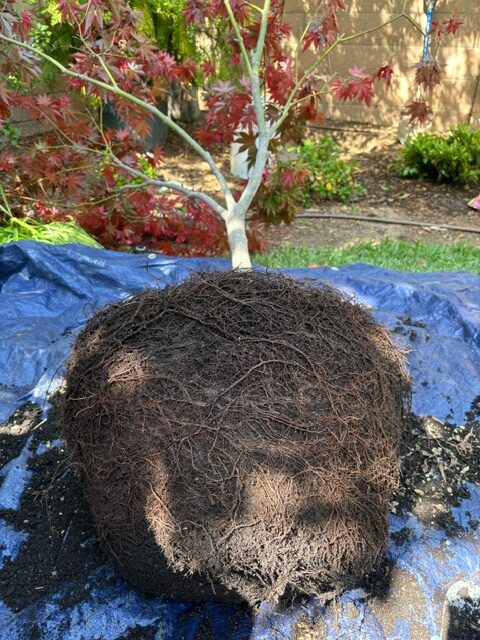
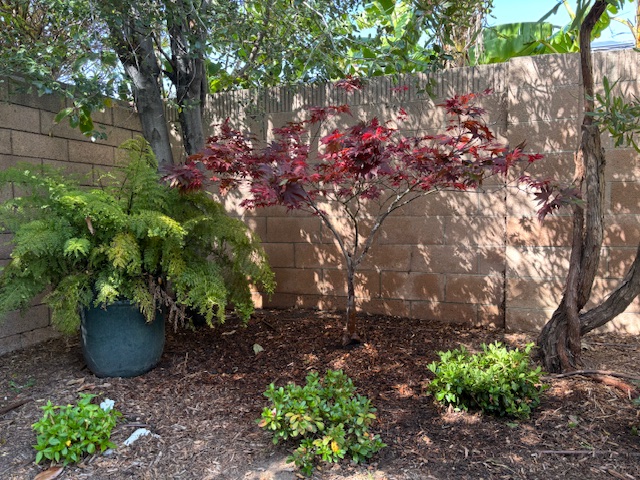
This Large Japanese Maple was carefully removed from its existing decorative pot and planted as an understory planting in this charming classical garden in Newport Beach filled with Azaleas, Camellias, Roses, Ferns, and other plants.
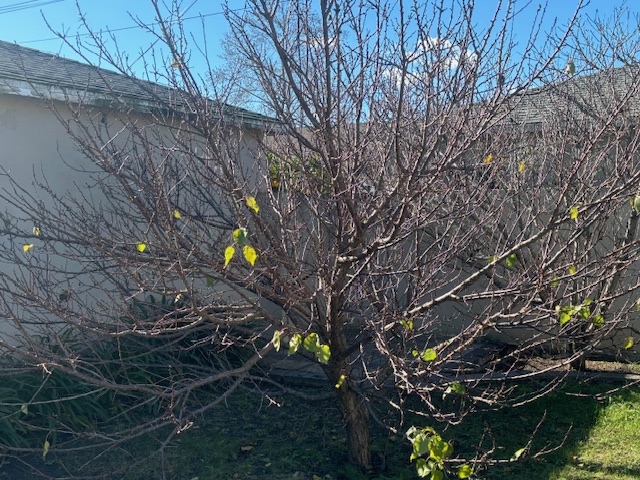
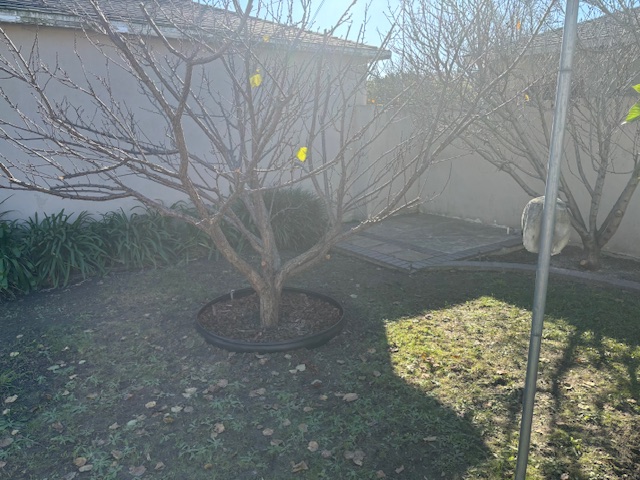
Fruit Tree Planting, Mulch Ring Installtion, Pruning, and Maintenance
Apricot Tree in its dormant season prior to pruning and ring installation
Apricot Tree in its dormant season after pruning and mulch ring installation